


Clinically Backed TMJ Massage Routine for Jaw Relief in Days, Raleigh
- Intuitive Balance Massage

- 4 days ago
- 10 min read
Gentle self-massage plus simple jaw exercises often reduces muscle-driven TMJ pain and improves mouth opening within days. Research backs this up, showing measurable relief after a single session in some cases. That said, sudden jaw locking, numbness, fever, or pain that keeps getting worse needs a clinician’s eyes, not a foam roller. What follows is a safe routine, the exercises that make it work better, and the evidence behind all of it.
TL;DR:
Gentle self-massage combined with jaw exercises offers short-term relief mainly for muscle-related TMJ pain, with measurable improvements within days.
Warm compresses before massage enhance muscle pliability, while pinpointing pressure points on the masseter, temporalis, and neck yields faster pain reduction.
Combining massage with specific exercises, such as controlled openings and chin tucks, significantly boosts mouth opening and reduces discomfort over single interventions.
Higher success rates are shown when soft tissue therapy is paired with ongoing exercise, with evidence indicating faster relief compared to massage alone.
Seeking professional treatment is advised if symptoms like jaw locking, numbness, or worsening pain persist despite consistent self-care efforts.
Table of Contents
How to Prepare Safely Before TMJ Massage
Most people jump straight to rubbing their jaw the second it aches, and that’s usually where mistakes start. A few minutes of prep changes how effective and how safe the massage actually is.
Start by finding your jaw’s “rest position.” Let your lips close gently, keep your teeth slightly apart, and rest your tongue lightly on the roof of your mouth without pushing. This is the neutral position your jaw should return to between clenches, and checking it before you begin gives you a baseline of what “relaxed” actually feels like for your particular jaw.
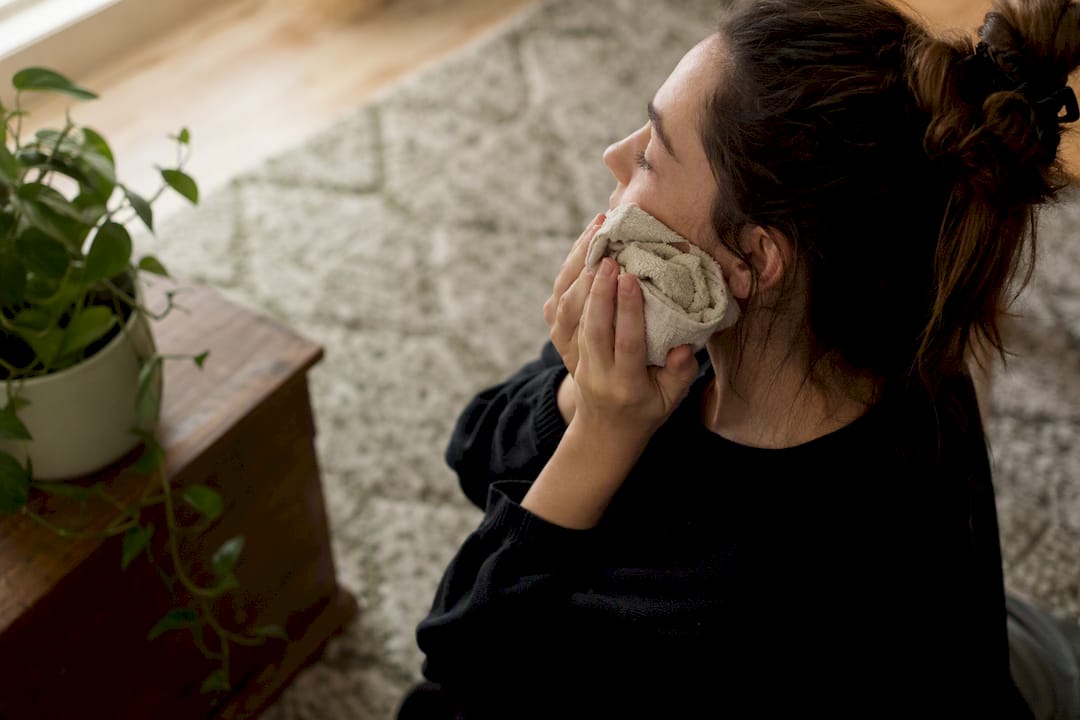
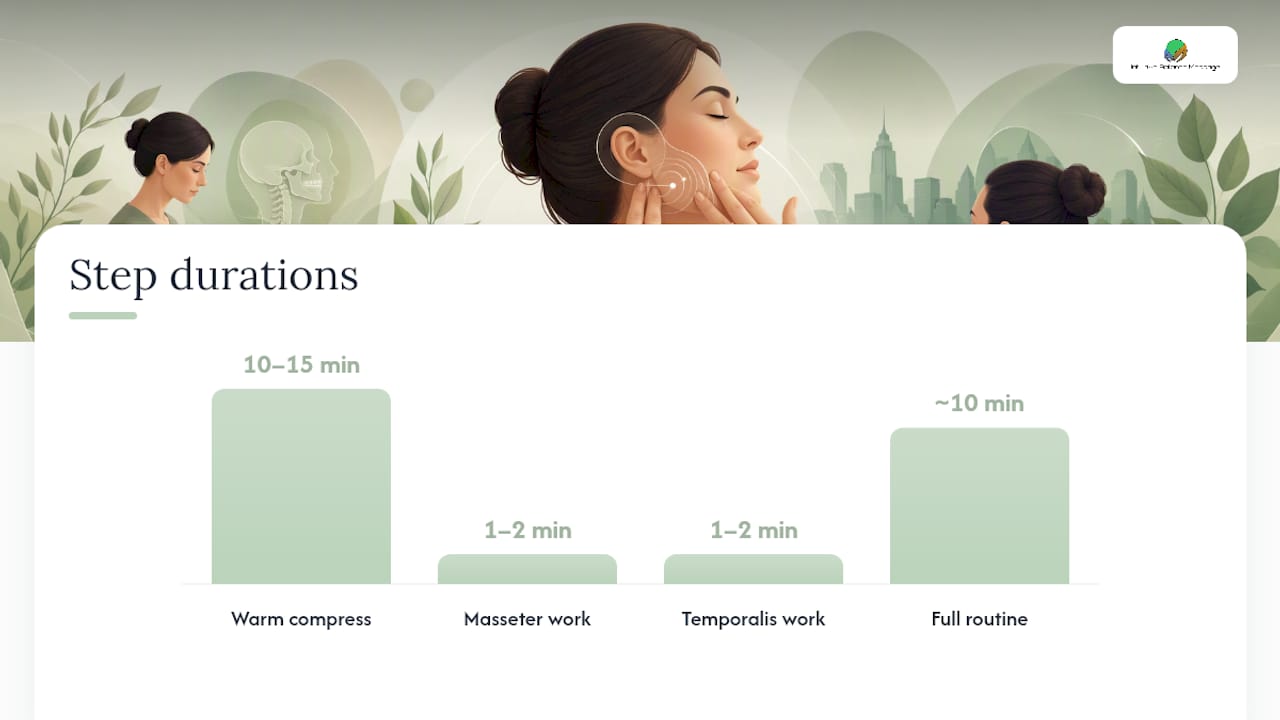
Apply a warm compress for 10 to 15 minutes before you start massaging. Heat increases blood flow to the masseter and temporalis muscles and makes the tissue more pliable, so your fingers can actually reach the tight bands instead of pushing against a locked-up muscle.
On pressure: aim for firm but not sharp. You want to feel a “hurts so good” sensation on tender spots, never a jolt of pain that makes you flinch or clench harder. Sessions should stay short, 10 to 15 minutes total, since prolonged aggressive pressure tends to aggravate irritated muscle tissue rather than release it.
A word on technique scope. Some TMJ programs include intraoral work, meaning massage performed from inside the mouth to reach the medial and lateral pterygoid muscles. This requires gloved hands, trimmed nails, and real anatomical knowledge of the throat and gag reflex. Leave this to a trained clinician. External techniques, the ones covered in this guide, reach the masseter, temporalis, and neck muscles effectively without any of that risk.
Watch for these signals that mean it’s time to stop self-care and see a professional:
Sudden jaw locking that doesn’t release within a few minutes
Numbness or tingling in the face or jaw
Progressive weakness when biting or chewing
Fever accompanying jaw pain
Pain that keeps intensifying despite rest and gentle care
Pro Tip: Do the warm compress step even on days you’re only doing five minutes of massage. Skipping it is the single most common reason people feel like self-massage “isn’t working” for them.
Where Are the TMJ Pressure Points on Your Jaw and Neck?
Knowing exactly where to press matters more than how hard you press. Most TMJ discomfort traces back to three muscle groups, not the joint itself, since temporomandibular disorders are frequently myofascial in origin, meaning the muscles that move your jaw are doing the complaining, not the hinge.
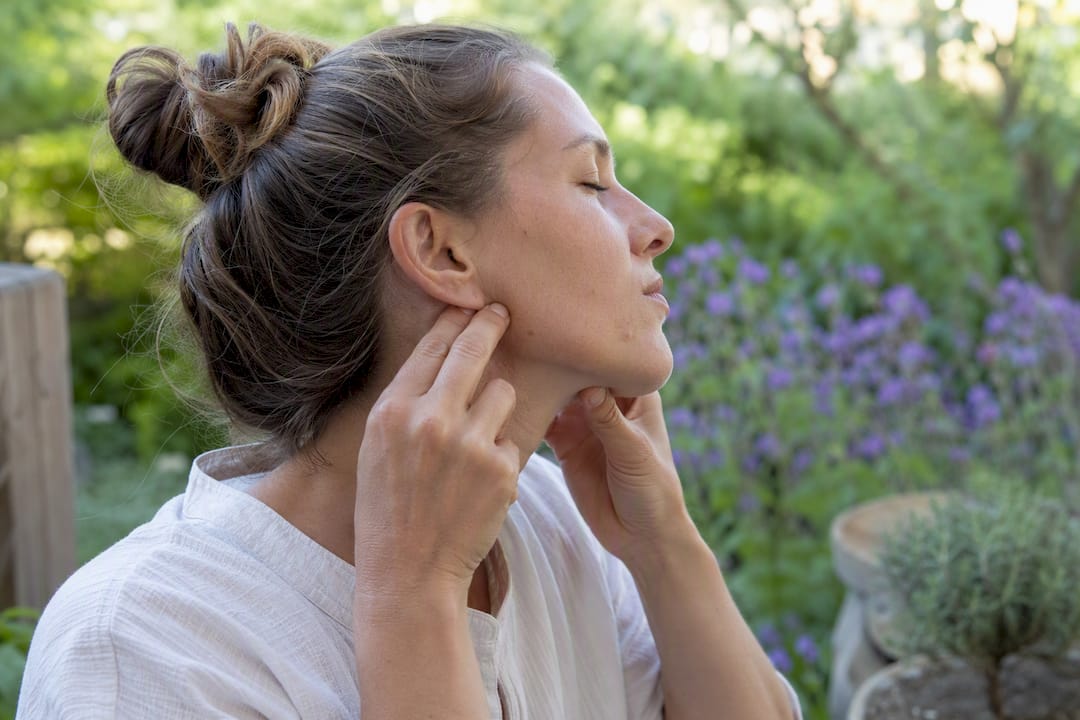
The masseter is the thick muscle you feel bulge when you clench your back teeth. Place two fingers between your cheekbone and the angle of your jaw, right where that bulge appears. This muscle runs from the cheekbone down to the jawline and is usually the most tender spot in anyone with TMJ-related jaw pain.
The temporalis sits at your temple. Clench your teeth again and feel just above and in front of your ear. That fan-shaped muscle spreads toward your hairline and often holds tension from both jaw clenching and general stress.
The neck and upper trapezius matter more than most people expect. Tension here can refer pain forward into the jaw and up toward the temple, so working sensitivity out of the upper shoulders often eases jaw symptoms indirectly.
Common tender points worth focusing on:
Mid-belly of the masseter, roughly halfway between cheekbone and jaw angle
Just above the angle of the jaw, where the masseter attaches to bone
Anterior to the ear, at the top of the masseter and edge of the temporalis
Upper trapezius, along the top of the shoulder near the base of the neck
Hold each point for 10 to 20 seconds with steady, moderate pressure. A 2023 randomized controlled trial on manual soft tissue therapy found that this kind of sustained pressure on trigger points reduced pain scores to 0.889 on a 0 to 10 scale within a week, while a comparable self-therapy protocol needed multiple sessions to reach similar relief. That gap is worth remembering: manual pressure on the right spot works faster than passive stretching alone.
Step-by-Step TMJ Trigger Point Massage Routine
This routine takes about 10 minutes and works through the muscles in order, from surface to deeper structures, finishing with the neck.
Warm up first. Apply a warm compress to your jaw and temple for 10 to 15 minutes. While it’s on, gently nod your jaw open and closed a few times to check your rest position.
Release the masseter. Place your index and middle fingers on the muscle belly between your cheekbone and jaw angle. Use small circular motions, working from the top of the muscle down toward the jawline. When you hit a tender spot, hold steady pressure for 10 to 20 seconds before moving on. Spend 1 to 2 minutes per side.
Work the temporalis. Move your fingers to your temple. Use the same small circular motion, covering the fan shape of the muscle from the top of your ear toward your hairline. This area tends to be less tender than the masseter but often carries background tension from stress-related clenching. Spend 1 to 2 minutes per side.
Knead the jawline and angle of the mandible. With your thumb and index finger, gently pinch and knead along the lower edge of your jawbone from your chin toward your ear. This targets where the masseter attaches to bone, an area that gets overlooked when people focus only on the cheek.
Add lateral glide support. With your mouth slightly open, use one hand to guide your jaw in a gentle side-to-side glide while your other hand keeps light pressure on the masseter. This isn’t forceful stretching, just enough movement to encourage the muscle to release under your fingers.
Release the neck and upper trapezius. Reach across your body with your opposite hand (right hand to left shoulder, for example) and knead the top of your shoulder and the side of your neck. Because tension here can refer pain forward into the jaw, this step often produces jaw relief that seems disconnected from the jaw itself.
Finish with the rest position check. Let your jaw settle back into that neutral position from step one. Notice whether it feels easier to find than before you started.
Do this routine twice daily, ideally morning and evening, for the most consistent results. Start with lighter pressure the first few sessions and increase gradually as your tissue tolerance builds. If pain increases during or after a session, back off the pressure and shorten the session rather than pushing through.
Pro Tip: If one side of your jaw is noticeably more tender than the other, spend an extra 30 seconds there, but never skip the less tender side. Asymmetric tension often creates a compensation pattern that keeps the tighter side irritated.
What Exercises Help TMJ Pain Alongside Massage?
Massage loosens the tissue. Exercise teaches your jaw to move well once it’s loose, and skipping this step is why some people plateau. A 2024 randomized controlled trial found that people who combined massage with post-isometric relaxation exercises had significantly better pain scores and maximum mouth opening than those who received massage alone, with results strong enough that researchers considered the difference highly statistically meaningful.
Four exercises pair well with the massage routine above:
Rest-position practice. Several times a day, consciously let your jaw fall into the neutral position with lips together, teeth apart, tongue resting lightly on the roof of your mouth.
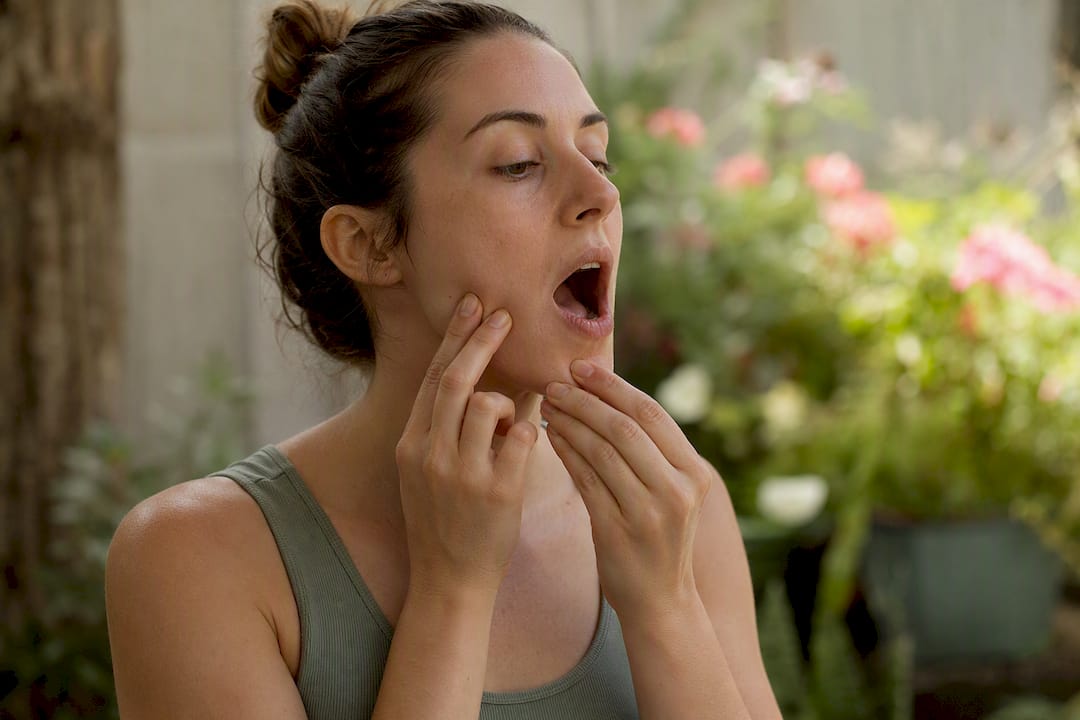
Slow controlled openings. Open your mouth slowly to about 80% of your comfortable range, hold for two seconds, then close slowly. Repeat 10 times.
Resisted mouth opening. Place your fist gently under your chin and press upward slightly while you try to open your mouth against that resistance. Hold for 5 seconds, then release. Do 3 sets of 8 to 10 reps.
Chin tucks. Pull your chin straight back, as if making a double chin, without tilting your head down. Hold for 5 seconds. Repeat 10 times to address neck contributors to jaw tension.
For the neuromuscular cue, rest your tongue against the roof of your mouth while opening and closing slowly. This encourages a more controlled opening pattern and discourages the lateral shifting some people develop when one side of the jaw is tighter than the other.
Do these exercises once in the morning and once in the evening, ideally right after your massage session while the tissue is warm and pliable.
What Does the Research Say About Massage for TMJ?
The evidence for massage helping TMJ symptoms is genuinely encouraging, though it comes with real limits worth understanding before you set expectations.
The 2023 RCT on manual soft tissue therapy showed a rapid analgesic effect, meaning pain dropped noticeably after a single treatment, while a self-directed therapy group needed about eight sessions to reach similar results.
The 2024 trial on massage plus post-isometric relaxation found combining the two produced significantly better pain and mouth-opening outcomes than massage by itself.
A systematic review and meta-analysis of 20 randomized controlled trials confirmed manual therapy produces short-term improvements in both pain and maximum mouth opening, though the review noted effect sizes are often modest and mouth-opening gains sometimes fall below the threshold generally considered clinically meaningful.
The practical takeaway: consistent, gentle self-care combined with the right exercises gives you the best realistic shot at short-term relief. It’s not a guarantee of a permanent fix, and most TMD cases respond to conservative, non-surgical care when approached this way rather than through any single aggressive intervention.
How Intuitive Balance Massage approaches TMJ-Related Tension
When someone comes in with jaw pain, the first thing worth sorting out is whether the discomfort is coming mostly from the muscles or from the joint itself. That distinction shapes everything that follows. Intuitive Balance Massage starts an initial session by assessing muscle tone in the masseter, temporalis, and upper cervical region, along with how the jaw moves through its range, before deciding where to focus.
A typical session for jaw-related tension combines targeted soft tissue work on the muscles covered in this guide with a short home exercise plan you can keep doing between visits. Nobody here claims to cure TMJ. The goal is realistic: less muscle tension, better mobility, and a plan you can maintain on your own.
New clients can try this work through the $60 introductory session, a low-pressure way to see whether hands-on care fits into how you’re already managing your jaw tension.
What Actually Matters Here (And What Doesn’t)
The self-massage routine in this guide works, and the research backs that up clearly. But here’s what conventional advice usually gets wrong: it treats massage as a standalone fix instead of one half of a pair. Massage without exercise fades faster. Exercise without massage takes longer to get started because the tissue is too guarded to move well. The combination is where the actual gains show up, and the 2024 trial data makes that gap hard to ignore.
The other thing worth saying plainly: a few millimeters of extra mouth opening after a massage session feels significant to the person experiencing it, even when researchers note it falls short of what’s considered a clinically important change on paper. Don’t dismiss small, consistent gains just because a study caveat exists. Consistency over weeks matters more than any single session.
If you’re dealing with jaw pain that muscle work alone hasn’t resolved after a couple of weeks of honest effort, that’s your signal to get a professional assessment rather than pushing harder on your own.
— John
Book a Targeted TMJ Massage Session in Raleigh
Trying to release your own masseter with sore fingers only gets you so far. A trained therapist can access the deeper layers and the neck referral patterns you can’t reach solo, which is where an in-person session makes the biggest difference over home care alone. Intuitive Balance Massage offers therapeutic and deep tissue sessions in their Downtown Raleigh studio, tailored to the specific muscles driving your jaw tension rather than a generic full-body routine.
New clients can start with the $60 introductory rate, an easy way to test whether professional soft tissue work speeds up what you’re already doing at home. Booking takes a few minutes online, and sessions are available for Raleigh and Cary residents looking for consistent, hands-on care.
Check availability and book your session here to get a jaw assessment scheduled this week.
Sources
FAQ
Where Is the Main Pressure Point for TMJ?
The most reliable pressure point sits mid-belly of the masseter, between your cheekbone and jaw angle, which you can feel bulge when you clench your back teeth.
What Triggers a TMJ Flare-Up?
Common triggers include prolonged clenching or grinding, stress, poor posture during long desk sessions, and cold weather tightening jaw and neck muscles; desk-related posture habits are a frequent overlooked contributor.
Is There a Traditional Remedy for TMJ Discomfort?
Warm compresses and gentle acupressure on jaw and facial points appear across several traditional wellness practices, though the strongest clinical evidence still points to targeted soft tissue massage combined with jaw exercises.
Where Should You Massage to Help TMJ Pain?
Focus on the masseter (cheek to jaw angle), the temporalis (temple area), and the upper trapezius and neck, since tension in all three commonly contributes to jaw discomfort.
Does Massage Actually Help TMJ Pain?
Yes, for muscle-driven jaw pain specifically. Multiple randomized trials show massage reduces pain and modestly improves mouth opening in the short term, especially when combined with therapeutic exercises.
This article is general information, not a substitute for advice from a qualified doctor. Consult a qualified healthcare professional about your own circumstances before acting on anything here.
Comments