


Thoracic Outlet Massage: Techniques and Safety Guide for Raleigh

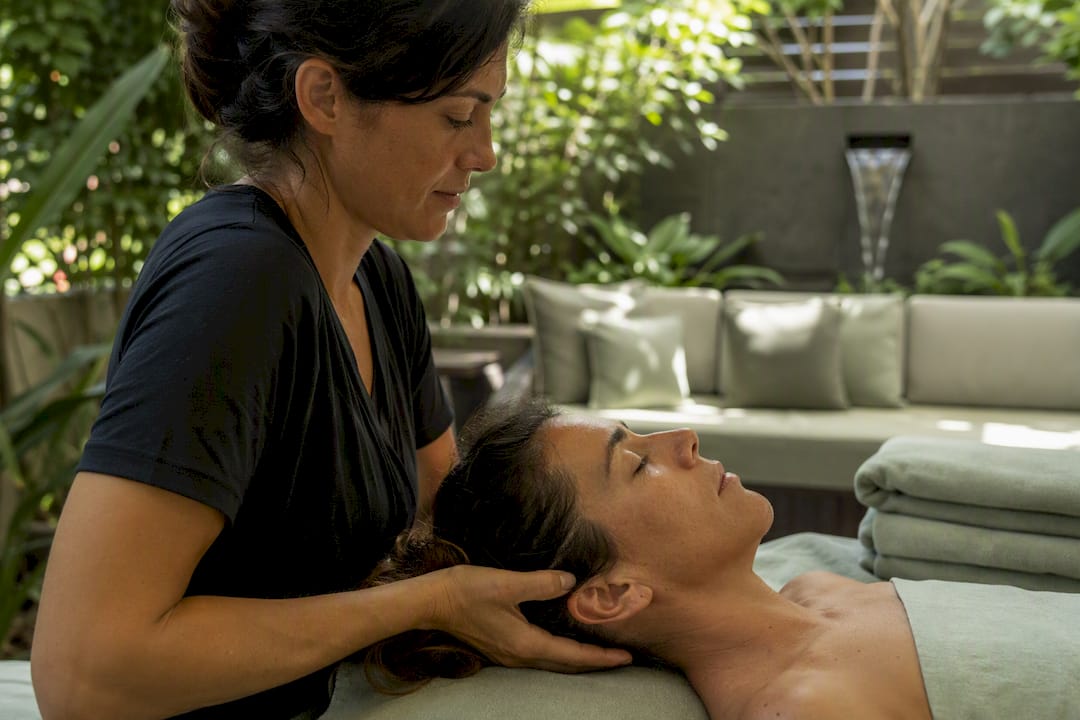
Massage can ease thoracic outlet syndrome symptoms for many people, but only when it targets the right muscles gently and gets paired with exercise and breathing work. A single case report tracking six massage sessions over eight weeks found meaningful drops in numbness that held steady a year later. That is one patient, not a guarantee, but it matches what a broader review of neurogenic TOS rehabilitation found: soft tissue work shows up in most conservative treatment plans, usually alongside stretching and strengthening.
Right now, if you are dealing with thoracic outlet symptoms, three things matter more than any specific technique:
Stop any aggressive self-massage or deep probing into the neck and collarbone area. Pressing hard on inflamed or compressed tissue can aggravate nerve irritation.
Try gentle, breath-coordinated positional release before anything more intense. Lying back with support under your shoulder blades and breathing slowly often calms symptoms faster than deep pressure.
Call a physician promptly if you notice color changes in your hand, a pulsing lump near the collarbone, or rapidly worsening weakness. Those are vascular or neurological red flags that need medical evaluation, not massage.
Key Takeaways
Massage relieves thoracic outlet symptoms most reliably when it combines gentle positional techniques, breathing coaching, and consistent exercise rather than relying on deep pressure alone.
Point | Details |
Gentle beats aggressive | Deep probing into the neck and collarbone can worsen nerve irritation; positional, breathing-coordinated techniques are safer and more effective. |
Screening comes first | A pre-session check for vascular signs, symptom triggers, and red flags should happen before any hands-on work begins. |
Pair massage with exercise | Scapular stabilization, daily stretching, and diaphragmatic breathing help sustain relief between sessions. |
Evidence is real but limited | A documented case report showed lasting improvement over six sessions, but high-quality research on massage for TOS remains limited. |
Book a targeted 60-minute session | Intuitive Balance Massage in downtown Raleigh offers a $60 introductory rate for new clients seeking thoracic outlet–focused tension relief. |
Table of Contents
What Is Thoracic Outlet Massage and How Does It Target Compression?
Thoracic outlet massage refers to manual therapy techniques aimed at the muscles and soft tissue surrounding the thoracic outlet, the narrow passageway where nerves and blood vessels travel from your neck to your arm. The clinical term for the condition itself is thoracic outlet syndrome (TOS), and understanding its anatomy explains why generic neck rubs rarely help and why targeted work does.
Three tight spaces matter here. The interscalene triangle sits between your front and middle scalene muscles at the base of your neck, where nerve roots and the subclavian artery pass through. The costoclavicular space is the gap between your collarbone and first rib. The subcoracoid space, sometimes called the subpectoralis minor space, sits underneath your pec minor muscle near the armpit. Compression at any of these three points produces the numbness, tingling, or aching that brings people in for treatment.
The muscles that most often contribute to that compression include:
Scalenes (anterior and middle) — chronic tightness here narrows the interscalene triangle directly.
Sternocleidomastoid (SCM) — often overactive in people who breathe with their upper chest instead of their diaphragm.
Pectoralis minor — shortens with forward-rounded posture and can compress the subcoracoid space.
Upper trapezius and levator scapulae — elevate the shoulder girdle and add tension through the whole region.
Therapists palpate these landmarks by feeling along the clavicle, tracing the scalene bellies just lateral to the trachea, and locating pec minor beneath the collarbone muscle. This is not territory for self-diagnosis. The supraclavicular triangle, right above your collarbone, houses the brachial plexus and subclavian vessels close to the surface. Deep self-probing there risks provoking the very symptoms you’re trying to relieve, which is one reason a trained hand matters more here than in most other massage work.
What Should Happen Before Any Thoracic Outlet Massage?
A responsible massage session for thoracic outlet symptoms starts with questions, not pressure. Before any hands-on work begins, a therapist should walk through a short screening process to understand what they are dealing with and rule out anything that needs a doctor first.
Ask about symptom pattern and triggers. Does numbness follow arm elevation, prolonged sitting, or carrying a bag on one shoulder? Neurogenic TOS, the far more common form, typically follows position and activity. Vascular TOS can show swelling, color change, or a heavy, cold sensation in the arm.
Screen for red flags. Progressive weakness, a visibly swollen or discolored arm, or a pulsing mass near the collarbone signal a referral to a physician before massage proceeds. Mayo Clinic’s overview of TOS lists these vascular and neurological warning signs clearly.
Use provocation tests as information, not diagnosis. Therapists may reference tests like Roos, EAST, or Adson’s maneuver, which reproduce symptoms through specific arm positions, to understand what aggravates the outlet space. These are assessment tools performed by trained clinicians, not something to try at home.
Check posture and breathing pattern. Forward head position and shallow, chest-dominant breathing both narrow the thoracic outlet and often show up before any hands-on treatment begins.
Pro Tip: If a technique reproduces your usual numbness or tingling within a few seconds and it does not ease when you back off, that is your therapist’s cue to stop and adjust, not push through. Good TOS work should calm symptoms during the session, not provoke them.
Contraindications include acute vascular signs (cold, pale, or blue-tinged hand), suspected blood clot, or any recent trauma to the shoulder or clavicle that has not been medically evaluated. If symptoms intensify mid-session and don’t settle within a minute of easing pressure, the session should stop and the client should follow up with their physician, per guidance from Johns Hopkins Medicine on conservative versus surgical management.
What Techniques Actually Relieve Thoracic Outlet Tension?
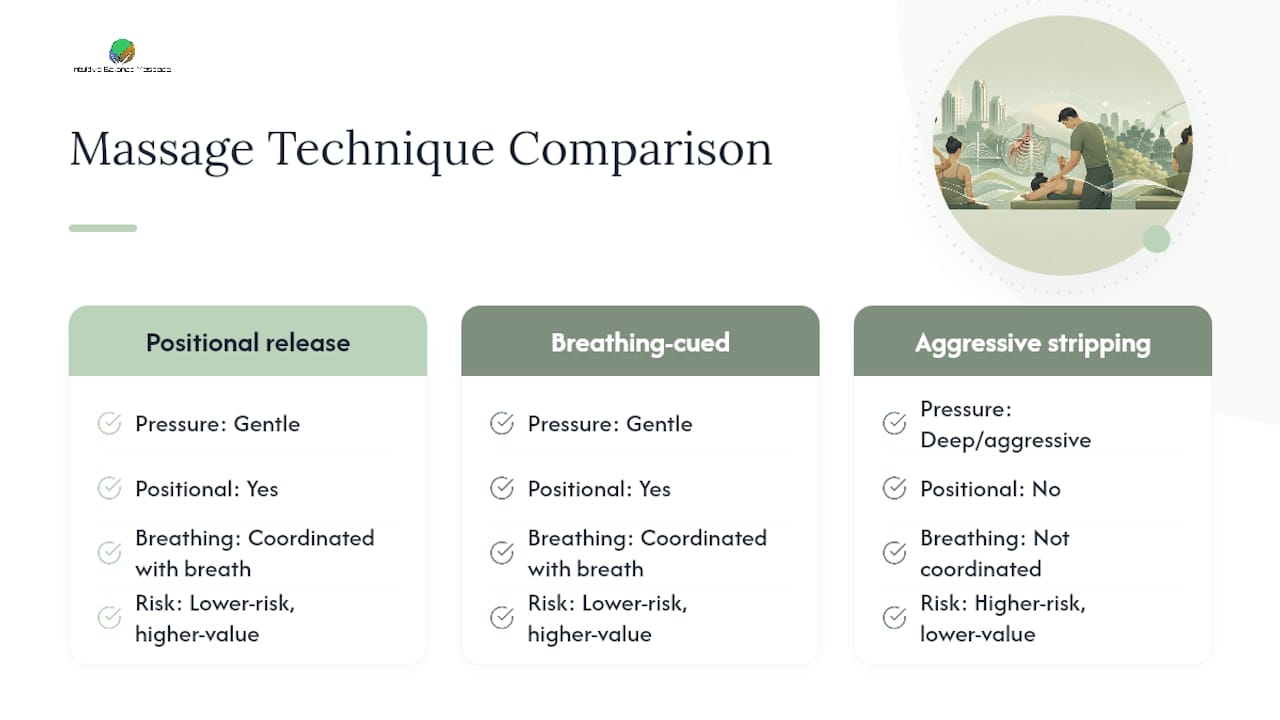
The techniques that help most share one trait: they are gentle, positional, and coordinated with breathing rather than driven by deep pressure. Professional guidance from the American Massage & Bodywork resource on TOS points to positional releases and breathing-cued work as lower-risk, higher-value approaches than aggressive stripping through the scalenes.
Session flow and positioning
A well-structured session for thoracic outlet tension typically moves through four stages:
Breathing and positioning (5 to 10 minutes). The client lies supine with a bolster under the knees and sometimes a small towel roll under the thoracic spine to open the chest. A few minutes of slow diaphragmatic breathing settles the nervous system before any manual work starts.
Positional release (10 to 15 minutes). The therapist gently supports the head and shoulder in a shortened position for the tight muscle, holds it while the client breathes, and allows the tissue to release without force.
Targeted soft tissue work (20 to 30 minutes). Short, focused technique blocks address scalenes, pec minor, and the clavicular region, generally in three to five minute segments with frequent check-ins.
Reassessment (5 to 10 minutes). The therapist retests range of motion and asks about symptom changes, then reviews a home program.
This structure mirrors what’s described in the case report on massage therapy for TOS, where sessions combined reactive neuromuscular therapy, myofascial release, lymphatic drainage, and breathing education rather than one isolated technique.
Scalenes and SCM
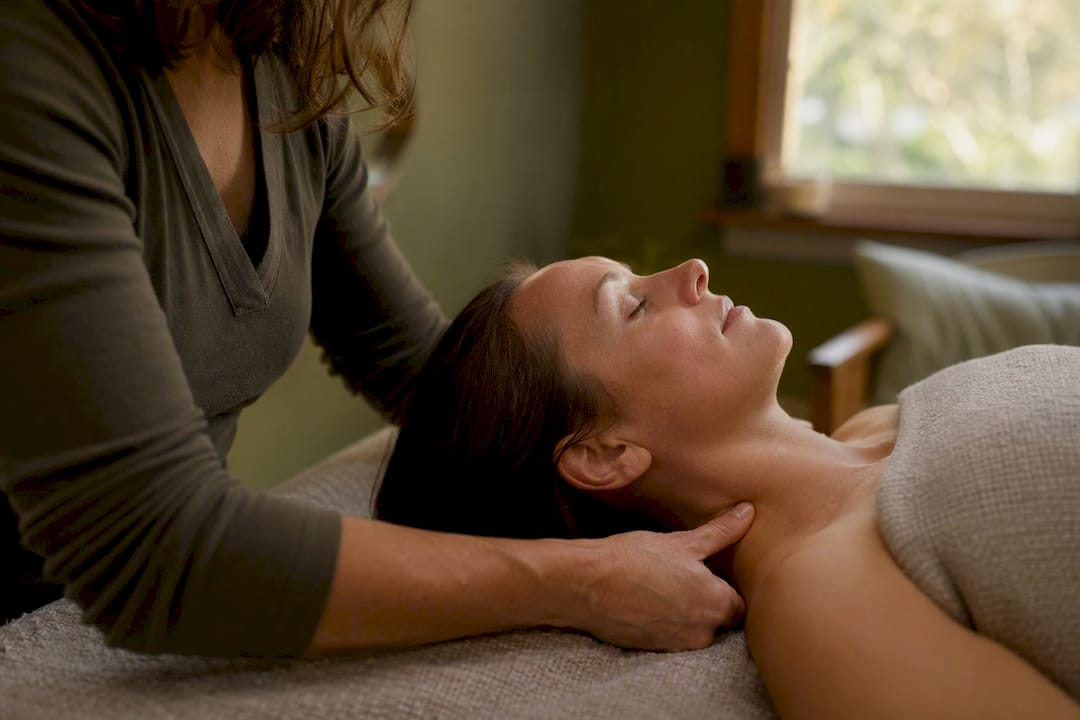
With the client supine, the therapist supports the head in slight side bending away from the tight side, applies light traction, and holds while cueing slow inhales through the nose. Depth stays shallow here. This is not an area for thumb-driven deep tissue pressure; the goal is length through sustained, gentle hold, not force.
Pectoralis minor and major
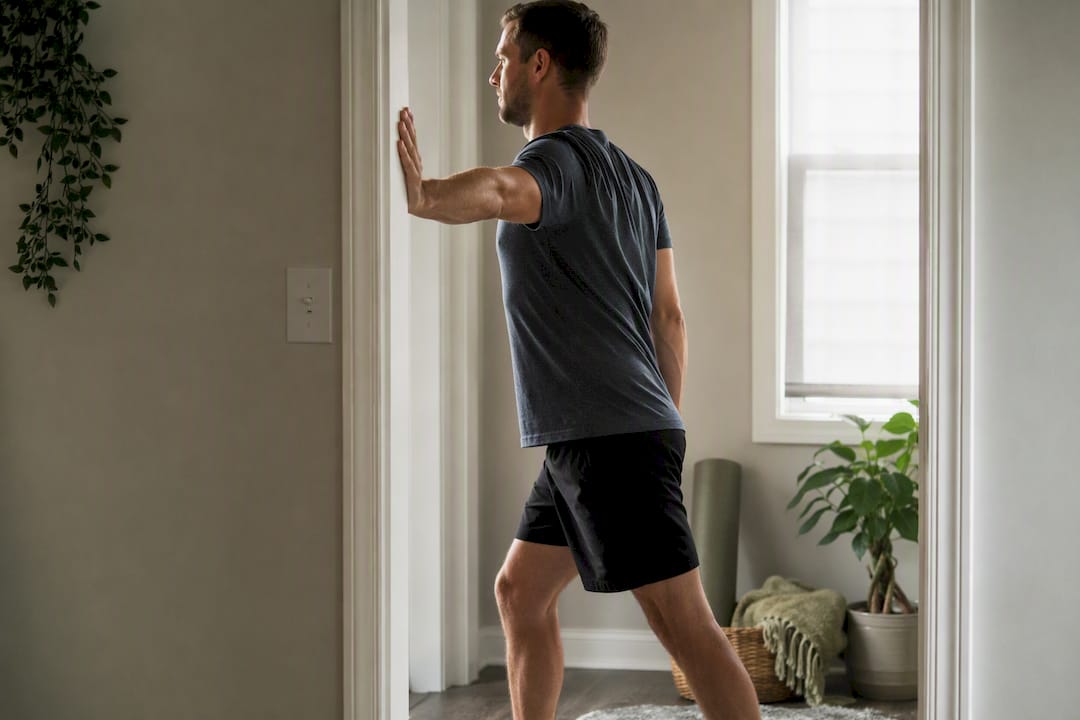
A doorway stretch, where the client places a forearm on a doorframe and gently leans forward, is a classic self-care version of what a therapist does manually with fingertip contact under the collarbone. In-clinic, the therapist works along the pec minor from origin to insertion using slow, broad contact, staying lateral to the axilla and never compressing directly into the armpit, where vessels and nerves run close to the surface.
Clavicle mobilization
Gentle superior to inferior glides along the collarbone, performed with flat fingers and minimal force, can create a small amount of extra space in the costoclavicular gap. The therapist palpates carefully to avoid pressing directly on the subclavian vessels beneath the bone.
Upper trapezius and levator scapulae
These respond well to slower stripping techniques and light trigger-point work, since they sit further from major vessels than the scalenes do. Gentle anterior neck and light lymphatic strokes can also reduce the puffy, congested feeling some clients report.
Neural mobility, handled carefully
Some clients tolerate gentle nerve glides, small, rhythmic movements of the arm and neck designed to encourage nerve mobility without stretching it. These should never provoke shooting or electric pain. If a client reports that sensation, the movement stops immediately. Persistent shooting pain, new weakness, or symptoms that spread down the arm during treatment are reasons to pause and refer to a physician rather than push through.
Self-care between sessions
Between clinic visits, a few simple practices support what your therapist is doing:
Foam ball chest release: lean the front of your shoulder against a wall with a soft ball between you and the wall, applying light, sustained pressure for 30 to 60 seconds.
Scalene stretch: seated, gently tilt your ear toward one shoulder while your opposite hand lightly anchors your collarbone; hold 20 to 30 seconds, two to three repetitions per side.
Doorway pec stretch: forearm on a doorframe, gentle lean forward for 20 to 30 seconds, two to three sets.
Diaphragmatic breathing: five minutes daily, hand on your belly, focusing on expanding your abdomen rather than lifting your shoulders on the inhale.
Keep all of these gentle. If a stretch reproduces numbness or tingling, ease off and mention it at your next appointment.
How Do Exercise and Breathing Extend the Benefits of Massage?
Massage loosens the muscles around a compressed thoracic outlet, but if your posture and movement patterns stay the same, that tightness tends to creep back. The scoping review of NTOS rehabilitation found exercise was the most frequently used intervention across nearly two dozen studies, appearing far more often than massage alone, which is a strong signal that lasting relief depends on more than table time.
A sustainable weekly approach usually includes:
Scapular stabilization, two to three times weekly: light resistance band rows and scapular squeezes to build the postural support that keeps your shoulder blades from drifting forward.
Scalene and pec stretches, daily: the same gentle stretches described above, done consistently rather than intensely.
Diaphragmatic breathing practice, daily: five minutes, ideally timed right after your stretches while the tissue is still warm.
Gentle neural glides, only if your therapist has confirmed you tolerate them without symptom flare.
Ergonomic changes matter just as much as exercise. Raise your monitor to eye level so you are not craning your neck forward for hours. Keep your keyboard and mouse close enough that your elbows stay near your sides instead of reaching forward, which pulls the scalenes into a shortened position. If you carry a bag, alternate shoulders or switch to a backpack that distributes weight across both sides rather than one. Desk workers dealing with this kind of chronic upper body tension often find that small workstation adjustments do more for symptom control between sessions than any single stretch, a pattern covered in more depth in Intuitive Balance Massage’s guide for desk workers.
What Does the Research Actually Say About Massage for TOS?
The evidence base here is real but modest, and it points toward massage as one piece of a larger plan rather than a standalone fix. The most detailed data point comes from a documented case: a woman with TOS underwent six 50-minute sessions over eight weeks combining neuromuscular therapy, myofascial release, lymphatic massage, and breathing education.
Her numbness dropped from frequent occurrences to much less frequent episodes, with functional improvements tracked on the MYMOP2 outcome measure. Those gains held at a one-year follow-up, according to the published case report.
That is a single patient, and case reports can’t establish how typical that outcome is. The broader picture comes from a scoping review of several studies on neurogenic TOS rehabilitation, which found exercise programs in most protocols, manual therapy in some studies, and soft tissue massage also featured. The reviewers noted that intervention descriptions varied widely and that high-quality evidence for any single technique remains limited.
Practitioner commentary echoes this caution. Some clinical writing on TOS points out that deep pressure alone may bring short-term relief but can leave symptoms recurring if the underlying posture and movement patterns never change, reinforcing why massage tends to work best folded into exercise and breathing retraining rather than delivered in isolation. Realistic expectations matter: massage for thoracic outlet symptoms is usually one component of conservative care, not a guaranteed resolution, and severe or progressive cases may need referral for further medical evaluation per Johns Hopkins’ clinical guidance.
How Does Intuitive Balance Massage Approach Thoracic Outlet Tension?
At Intuitive Balance Massage in downtown Raleigh, sessions addressing thoracic outlet–related tension start with a conversation, not a treatment plan already decided in advance. Your therapist asks about your symptom pattern, when it flares, and what activities make it worse before any hands-on work begins.
A typical session structure includes:
Intake and screening, covering symptom history, posture habits, and any red flags that warrant a referral before proceeding.
Targeted soft tissue work on the scalenes, pec minor, upper trapezius, and clavicular region, adjusted in real time based on your feedback.
Breathing coaching woven into the session so you leave knowing how to reinforce the work at home.
A simple home program, usually two or three stretches plus a breathing cue, so progress doesn’t stall between visits.
If you’re booking, it helps to mention “thoracic outlet–related neck and shoulder tension” when you schedule so your therapist can plan session time accordingly. Intuitive Balance Massage operates from a historic building in Raleigh’s downtown district, which shapes the calm, unhurried pace of each appointment. As with any therapist-specific service, ask about individual clinician experience with TOS-related work when you call, since depth of familiarity with this condition varies by provider.
Ready to Book a Session for Thoracic Outlet Tension?
If you’re dealing with scalene or pec minor tightness tied to thoracic outlet symptoms, a 60-minute therapeutic massage is the right session length to request. That gives your therapist enough time for the full flow: breathing and positioning, targeted soft tissue work, and reassessment before you leave. When you book, add a note mentioning “thoracic outlet–related neck and shoulder tension” so your therapist can plan the session around your specific pattern rather than a generic upper-back routine.
At your first appointment, expect a short intake conversation about your symptoms and posture habits before any hands-on work starts. This is intentional. A safe, effective session for thoracic outlet tension depends on that initial screening, not on jumping straight to deep pressure.
New clients can also take advantage of Intuitive Balance Massage’s $60 introductory rate, a straightforward way to try a session before committing to ongoing care. Book your session through the services page to see current availability, or browse the full menu of massage services if you’re weighing which type fits your needs best. If you’re located near NC State or downtown Raleigh, appointments are easy to fit around a class schedule or a workday, and the clinic’s Glenwood South and downtown Raleigh location keeps things convenient for anyone working or living nearby.
Authoritative Resources and Primary Literature
Readers who want to go deeper into the original research and clinical guidance behind this article can start here:
Case Report: The Effects of Massage Therapy on a Woman with Thoracic Outlet Syndrome — the a treatment plan over several sessions and one-year outcome data referenced throughout this guide.
Physical assessment and rehabilitation for neurogenic thoracic outlet syndrome (NTOS): A scoping review — a review of 29 studies on conservative rehabilitation approaches.
Thoracic outlet syndrome - Mayo Clinic — symptom overview and referral guidance.
Thoracic outlet syndrome - Johns Hopkins Medicine — clinical management overview, including when surgical evaluation applies.
Thoracic outlet syndrome | ABMP — professional massage therapy guidance on technique selection.
A Clinic Perspective on Thoracic Outlet Tension
Most people who come in describing thoracic outlet symptoms have already tried to fix it themselves with a lacrosse ball and a lot of frustration. The pattern I see most often is someone pressing hard into their own collarbone area, getting temporary relief, and then feeling worse an hour later because the underlying posture and breathing pattern never changed. Gentle, well-sequenced work paired with a home program tends to hold up better over weeks, not just during the session itself.
If you’re dealing with these symptoms, the safest first step isn’t a deep tissue session. It’s an assessment-focused appointment where your therapist actually screens for what’s going on before deciding how to treat it. That approach costs you nothing in results and protects you from making things worse.
— John
This article is general information, not a substitute for advice from a qualified doctor. Consult a qualified healthcare professional about your own circumstances before acting on anything here.
Sources
FAQ
Should you massage thoracic outlet syndrome?
Gentle, positional massage can help many people manage thoracic outlet symptoms when combined with exercise and breathing work, according to a documented case report showing lasting improvement. It should always follow a proper screening for vascular or neurological red flags first.
What not to do with thoracic outlet syndrome?
Avoid aggressive deep pressure or self-probing into the supraclavicular triangle above the collarbone, since this area sits close to major nerves and blood vessels. Stop any technique that reproduces shooting pain, numbness, or tingling that doesn’t ease quickly.
How to release thoracic outlet tension?
Gentle positional releases combined with diaphragmatic breathing, along with targeted soft tissue work on the scalenes, pec minor, and clavicular region, are the safest and most supported approaches. A structured session that includes breathing coaching and reassessment tends to work better than isolated deep tissue work.
Can self-massage help with thoracic outlet syndrome?
Light self-care techniques like a doorway pec stretch, gentle scalene stretches, and diaphragmatic breathing practice can support symptom management between clinic visits. Self-massage should stay gentle and avoid deep pressure directly over the collarbone or into the armpit area.


Comments