


Upper Back Pain Massage: What Works and When to Book One

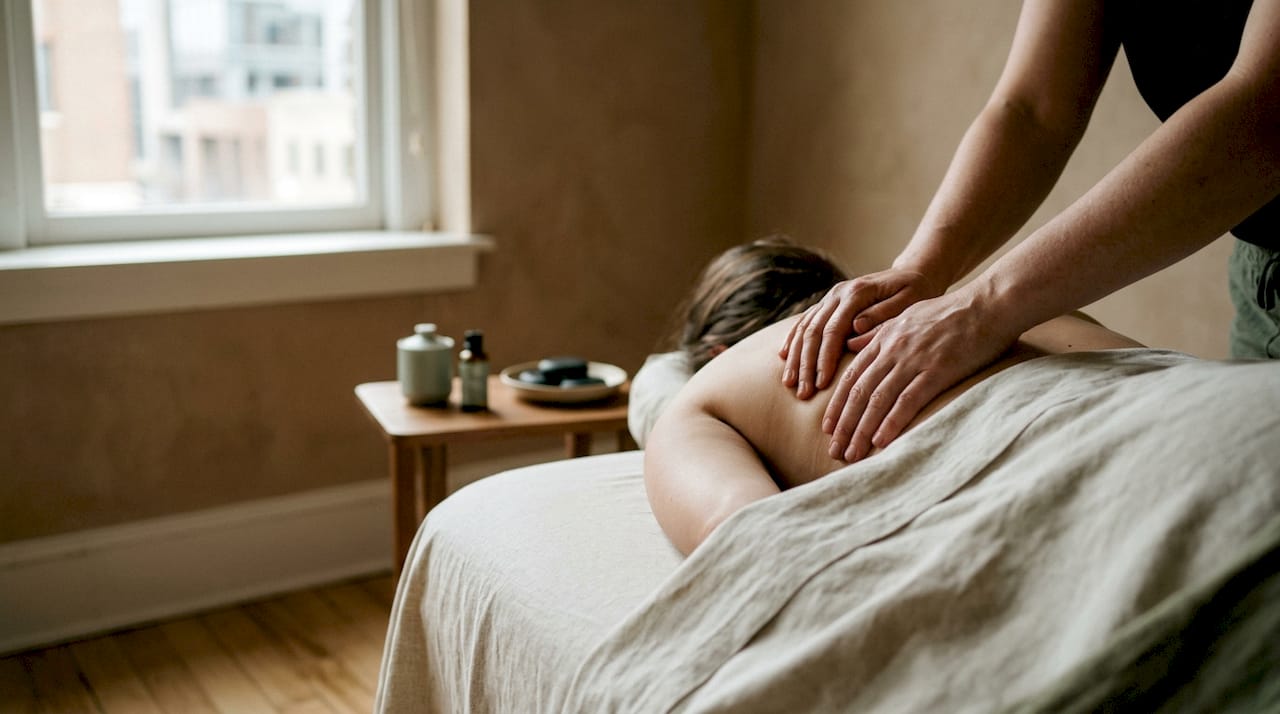
Yes, massage helps upper back pain when the cause is muscle tension, not a structural or nerve issue. Try a tennis-ball scapular release for two to three minutes right now, then a rhomboid kneading pass. If the ache is still there in a week, or it radiates down your arm, book a focused session with a licensed therapist rather than pushing through it alone.
TL;DR:
Self-massage techniques like tennis-ball scapular release and rhomboid kneading can relieve daily muscle tightness in the upper back, but persistent pain may require professional therapy.
A course of five massage sessions over five weeks has been shown to significantly reduce upper trapezius stiffness, with improvements lasting at least three weeks after the final session.
For chronic or stubborn knots, deep tissue massage and trigger-point therapy tend to be more effective than lighter Swedish strokes, especially when combined in a single session.
Preparation and communication with your therapist about your pain history, goals, and pressure preferences enhance treatment effectiveness and safety.
Using tools like foam rollers, lacrosse balls, and applying heat or cold daily can help maintain gains between professional sessions and prevent tension from rebuilding.
Table of Contents
Self-Massage Techniques for Upper Back Pain Relief
Most upper back tightness lives in three spots: the upper trapezius (the muscle running from your neck to your shoulder), the rhomboids (between your shoulder blades), and the scapular border. You can reach all three yourself with a tennis ball, your own hands, and about ten minutes.
Start seated in a chair with back support, or lie on the floor with knees bent if you want more control over pressure. Breathe slowly through your nose. Tight muscles guard harder when you hold your breath, so exhaling as you sink into a tender spot actually helps it release.
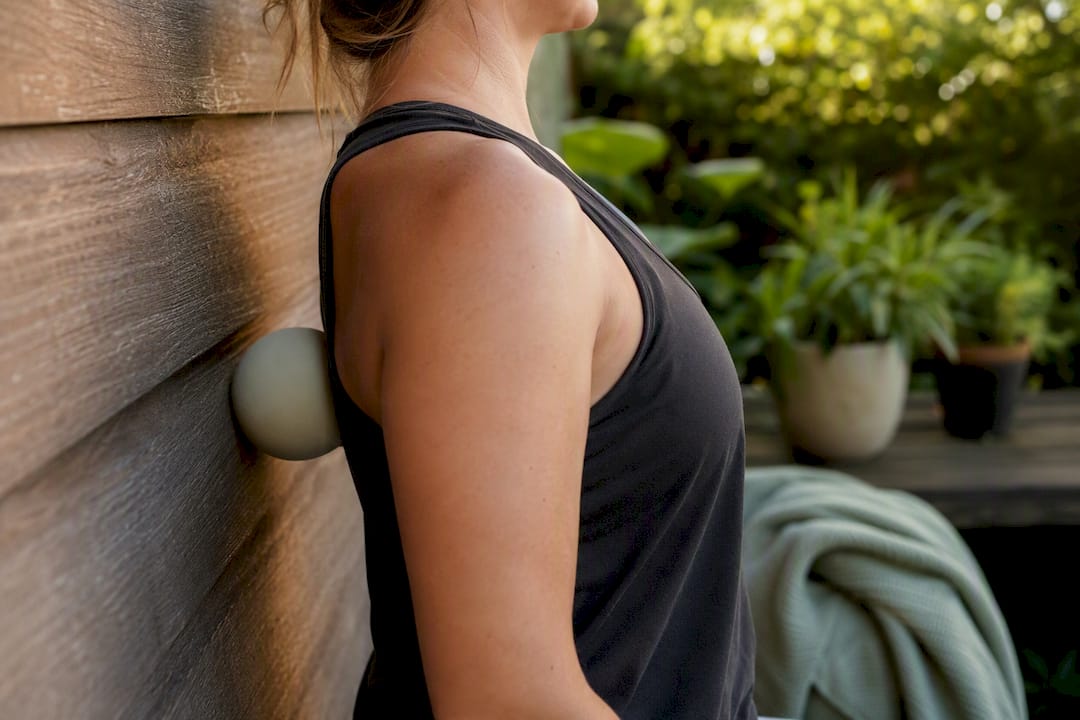
Tennis-ball scapular release. Place a tennis ball between your shoulder blade and spine, either against a wall or lying on the floor. Lean into it and hold for 20 to 30 seconds on any tender point, then shift the ball an inch and repeat. Spend two to three minutes per side.
Rhomboid kneading. Reach across your body with the opposite hand’s fingertips and find the muscle bands running vertically between your spine and shoulder blade. Use small circular pressure with your thumb or fingers, working from the base of the shoulder blade upward. Ten to fifteen passes per side is plenty.
Trapezius stripping. With your fingertips, press into the top of your shoulder near your neck and slide slowly outward toward the shoulder joint, following the muscle fiber direction rather than crossing it. Repeat five to eight times, easing pressure if the sensation turns sharp instead of achy.
This progression, working from broader contact toward smaller, targeted pressure, mirrors how practitioners approach upper back complaints clinically: start broad, then narrow in on specific tight spots. If you sit at a desk most of the day, pairing this with attention to your posture and workstation setup prevents the tension from rebuilding by Wednesday.
Stop any technique if you feel numbness, tingling, or sharp pain instead of the dull ache of a tight muscle releasing. Mild soreness for a day afterward is normal; anything sharper is your body telling you to back off.
Pro Tip: Do a slow, deep breath every time you find a tender spot. Muscles release faster when your nervous system isn’t bracing against the pressure.
Which Professional Massage Type Works Best for Upper Back Pain?
Self-massage handles day-to-day tightness, but persistent knots or deep, chronic tension usually respond better to trained hands. The right modality depends on what’s actually going on in your upper back.
Swedish massage uses lighter, flowing strokes and works well if your pain is tied to general stress or mild tightness rather than a deep, stubborn knot.
Deep tissue massage targets chronic tight bands and adhesions with sustained, focused pressure. It can feel intense the first few sessions, so tolerance builds over time.
Trigger-point therapy and myofascial release zero in on the small, hard nodules that cause referred pain, including the kind that radiates toward the neck or shoulder blade.
Sports or therapeutic massage blends manual work with active movement, useful if your upper back tightness comes from training, repetitive motion, or restricted shoulder mobility.
None of these work in isolation from each other. A good therapist often blends techniques within a single session, opening with Swedish strokes to warm the area, moving into deep tissue or trigger-point work on the specific problem spots, and finishing with lighter strokes to calm things down. If your pain overlaps with neck or shoulder tightness, mention that up front. Tension in the upper trapezius rarely stays isolated, and addressing the neck and shoulder together often gets better results than treating the upper back alone.
How to Prepare for a Massage Therapy Session
A few minutes of preparation changes how effective your session is. Before you book, run through this:
Note any recent injuries, surgeries, or areas of bruising.
List medications, especially blood thinners, and flag pregnancy if applicable.
Decide your top one or two goals: less stiffness, better shoulder mobility, general stress relief.
During intake, a licensed therapist will typically ask about your pain history, activity level, and pressure preference. This isn’t small talk. It directly shapes which techniques they reach for. Speak up during the session, too. Useful phrases include “lighter pressure, please,” “stay on that muscle a bit longer,” and “stop if it gets sharp.” Communicating your pressure tolerance clearly matters more than most people realize. Deeper isn’t automatically better; a session that mixes firm work with gentler strokes tends to produce better long-term relief than constant maximum pressure.
Pro Tip: Breathe slowly and let your shoulders drop toward the table as the therapist works. Muscles that are braced against pressure take longer to loosen than muscles that are allowed to relax into it.
How Many Massage Sessions Does It Take to Fix Upper Back Pain?
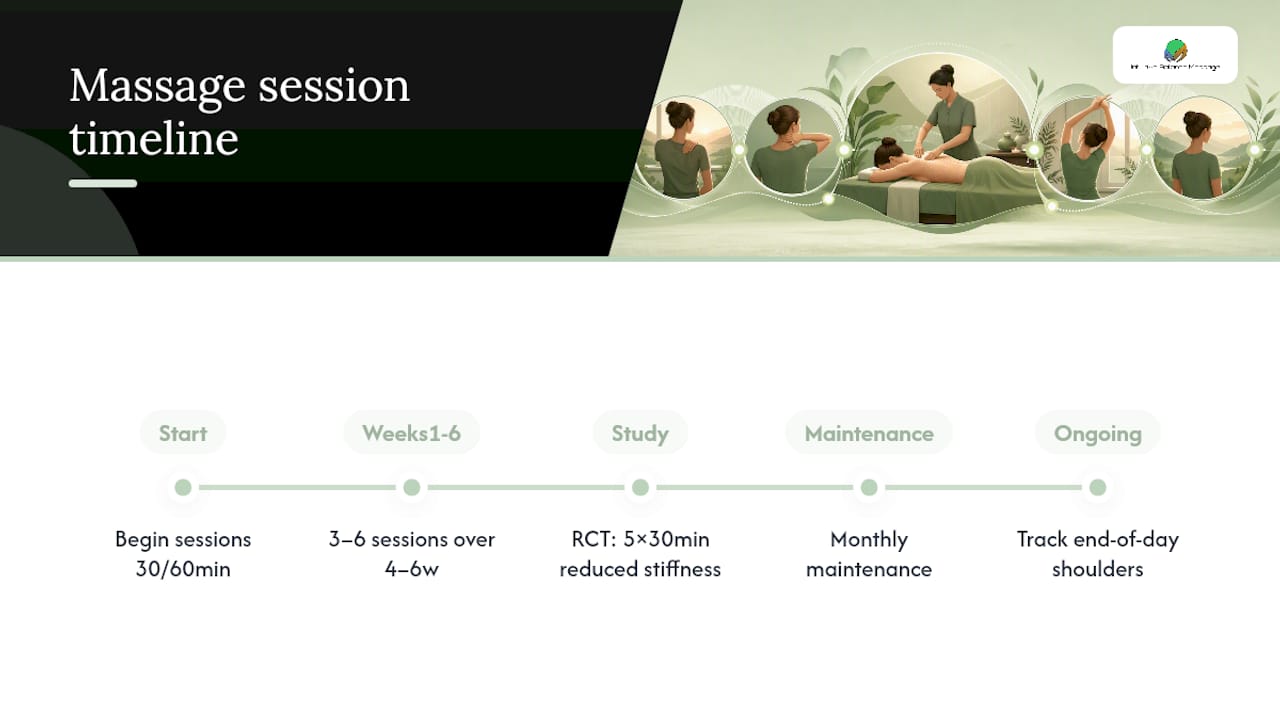
A typical session runs 30 or 60 minutes. Thirty minutes is usually enough for focused work on the upper back and shoulders alone; 60 minutes allows a therapist to address the whole back, neck, and shoulders together, which matters if your tension spreads across those areas.
A randomized controlled trial published in Frontiers found that five 30-minute therapeutic massage sessions spread over five weeks measurably reduced stiffness in the upper trapezius muscle, with the improvement still holding at least three weeks after the final session.
That’s a useful benchmark: a short course of consistent sessions, rather than a single one-off massage, appears to produce measurable, lasting change. A broader Cochrane review of massage for back pain backs this up in general terms, finding massage improves short-term pain and sometimes short-term function compared with no treatment, though the researchers rated the evidence quality low to very low and noted long-term benefits are less established.
A realistic plan looks like three to six sessions over four to six weeks, then spacing out to monthly maintenance once tension eases. Track how your shoulders feel by the end of a workday. That’s usually the first sign of real progress, and it connects directly to broader mobility and daily performance improvements clients notice over time.
When to Avoid Massage or See a Doctor First
Massage is safe for the vast majority of muscle-based upper back tension, but a few situations call for caution or a doctor’s evaluation first.
Recent surgery, active skin infection, or unhealed injury in the area.
Uncontrolled blood clotting disorders or current blood thinner use without medical clearance.
Fever, unexplained swelling, or signs consistent with a blood clot, such as one-sided leg swelling or warmth.
Sharp, worsening pain during a massage, or new numbness and weakness spreading down an arm.
Mild soreness for a day after a deep tissue session is normal and usually fades on its own. Pain that spikes sharply, spreads, or comes with numbness is different, and that’s worth getting checked out rather than massaged through. If you’re pregnant or on blood thinners, tell your therapist before the session starts. A licensed therapist will adjust pressure and positioning accordingly, or decline specific techniques if they’re not appropriate for your situation.
This article is educational and not a substitute for medical diagnosis or treatment.
Best Tools and Habits for Upper Back Pain Between Sessions
A few inexpensive tools extend what a massage session does, and a couple of daily habits keep tension from rebuilding.
Tennis ball in a sock. Ties off at one end so it doesn’t roll away, and works for the same scapular release described earlier.
Foam roller. Lying along it lengthwise and gently extending over it improves thoracic spine mobility, which takes pressure off the muscles around it.
Lacrosse ball. Firmer and smaller than a tennis ball, useful once you’ve built up tolerance for more pinpoint pressure.
Handheld massager. Convenient for reaching your own upper back without contorting your arm.
Heat works well before stretching or self-massage, since it loosens tissue and makes techniques more comfortable. Cold is better after an unusually intense session or if you’re dealing with acute soreness. For daily habits, add scapular squeezes (pull your shoulder blades together and hold for five seconds) and slow shoulder circles two or three times a day, especially if you’re at a desk. Pairing that with occasional adjunct tools, like a massage chair for regular maintenance, keeps the gains from a professional session going longer.
How Intuitive Balance Massage Approaches Upper Back Pain
At Intuitive Balance Massage in downtown Raleigh, sessions for upper back tension typically start the same way every good session should: a real conversation about what’s tight, what’s been going on physically, and what the client wants out of the hour. From there, therapists blend deep tissue work on the trapezius and rhomboids with broader Swedish strokes, adjusting pressure based on what the client tells them during the session rather than applying one fixed approach to everyone.
Clients most often seeking upper back work include urban professionals dealing with desk posture, athletes managing training load, and NC State students carrying backpack and study-related tension.
Sessions frequently close with simple home-care suggestions, like the tennis-ball release covered earlier, so the benefit carries past the appointment.
Follow-up scheduling is based on how the client’s body responds, not a fixed package.
This kind of tailored, technique-blended approach reflects what the clinic’s own guidance on recovery and daily performance consistently emphasizes: massage works best as part of an ongoing routine, not a one-time fix.
The Real Difference Between Trying Self-Massage and Booking a Session
Most people wait too long before booking a real session, and I think that’s backwards. Self-massage is genuinely useful for maintenance and for calming a bad day, but it has a ceiling. You can’t get proper leverage on your own rhomboids, and you’ll always ease off right before the deepest, most stubborn spot because your nervous system won’t let you push through pain you’re inflicting on yourself. A trained therapist doesn’t have that hesitation.
The conventional advice on this topic tends to frame massage as a one-off fix: get a massage, feel better, done. The Frontiers RCT tells a more useful story. It took five sessions over five weeks to produce a measurable, lasting change in trapezius stiffness. A single hour on the table rarely undoes months of desk posture.
My honest read: use self-massage daily as maintenance, but if the tightness has been there more than a couple of weeks, stop treating a single massage as the solution and start treating a short course of them as the actual plan.
— John
Book a Focused Upper Back Massage in Raleigh
If you’ve tried the tennis-ball release and the rhomboid kneading and you’re still tight by Friday, that’s your sign to bring in trained hands. Intuitive Balance Massage offers customized 60-minute therapeutic sessions built around exactly the muscles covered here: upper trapezius, rhomboids, and the scapular border, blended with deep tissue or Swedish technique depending on what your body needs that day. First-time clients get a real intake conversation, focused hands-on treatment, and simple home-care guidance to take with them, all at a $60 introductory rate. Book your first session and find out what a few weeks of consistent, targeted work actually feels like. If you’re in Glenwood South or downtown Raleigh, check appointment availability near you and get on the schedule this week.
FAQ
What type of massage is best for upper back pain?
Deep tissue and trigger-point therapy work best for chronic, stubborn tightness, while Swedish massage suits general stress-related tension; many sessions at Intuitive Balance Massage blend both based on what the muscle actually needs.
How do I release upper back pain?
Use a tennis ball against a wall or floor to work the scapular area, knead the rhomboids with your fingertips, and follow up with slow shoulder circles; if tightness persists past a week or two, a professional session addresses what self-massage can’t reach.
Where should you not massage on the back?
Avoid direct pressure over the spine itself, recent surgical sites, active skin infections, or areas with unexplained swelling or bruising, and skip deep pressure entirely if a blood clot is suspected.
Where is the pressure point for upper back pain?
Most tension concentrates where the upper trapezius meets the base of the neck and along the inner border of the shoulder blade where the rhomboids attach; both respond well to the tennis-ball and kneading techniques covered above.


Comments