


Massage for Shoulder Pain: What Actually Works, Fast

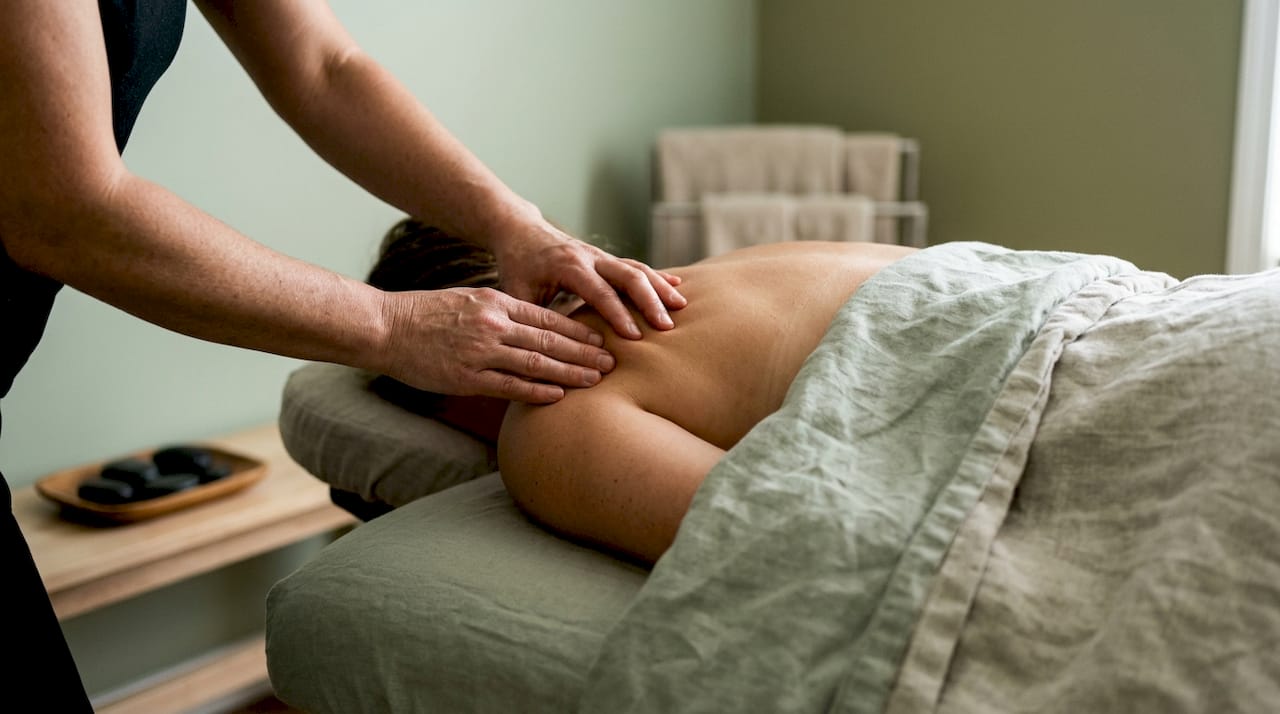
Yes, massage often reduces shoulder pain and improves range of motion when the source is muscle tension, trigger points, or postural overload. It’s less reliable on its own for structural issues like a torn rotator cuff, where hands-on work can ease surrounding tightness but won’t fix the tear itself.
Here’s a quick first step. Sit or stand tall, reach your right hand across your body to grip the top of your left shoulder, and squeeze the trapezius muscle rhythmically for 60 to 90 seconds while breathing slowly. Switch sides. Stop immediately if you feel sharp, radiating, or electric pain rather than a dull ache.
Dull soreness or tightness that eases with pressure: safe to keep working
Sharp, shooting, or numb sensations: stop and reassess
Pain plus visible swelling or noticeable weakness: skip self-massage and get it looked at
Quick fact: A 2013 meta-analysis found massage produced a significant immediate effect on shoulder pain compared to inactive treatments, though it didn’t outperform active therapies like exercise over the long run.
Key Takeaways
Massage relieves muscle- and tension-driven shoulder pain fast, but lasting mobility gains require pairing hands-on work with movement coaching and consistent self-care.
Point | Details |
Short-term relief is real | Massage significantly reduces shoulder pain immediately versus doing nothing, per meta-analysis findings. |
Combine with movement | Pairing massage with active rehab and posture work outperforms hands-on treatment alone. |
Tools work at home | A tennis ball, foam roller, and towel cover most self-massage needs for shoulder tightness. |
Frozen shoulder needs patience | Gentle, pain-guided stretches beat aggressive stretching for adhesive capsulitis. |
Book Intuitive Balance Massage | Their assessment-driven sessions target scapular mechanics and include take-home movement coaching for lasting results. |
Table of Contents
How Massage for Shoulder Pain Works, According to Research
Massage calms an overactive shoulder in a few specific ways. Pressure and kneading reduce resting muscle tone in the trapezius and rotator cuff group, deactivate trigger points that refer pain down the arm, boost local blood flow, and shift the nervous system out of the guarded, tense state that keeps muscles locked up. None of that repairs damaged tissue. It changes how the tissue feels and moves right now.
The research backs the short-term story more than the long-term one. That same 2013 systematic review reported a large immediate reduction in shoulder pain versus doing nothing, but no clear long-term functional edge over active treatments like guided exercise. A separate meta-analysis on massage therapy for shoulder pain reached a similar conclusion: pain drops and range of motion improves in the short window after treatment, and results hold up best when massage rides alongside active rehab rather than replacing it.
What does that mean in practice?
Massage alone can knock down pain and stiffness within a session or two
Lasting improvement usually needs movement work layered on top
Combining hands-on treatment with scapular exercises and posture correction outperforms either approach used by itself
Think of massage as the thing that opens the door. Movement is what walks through it.
How to Self-Massage a Sore Shoulder at Home
You don’t need special equipment to loosen a tight shoulder, though a tennis ball and a bath towel help. Work through these in order, spending 60 to 90 seconds per spot.
Upper-trap squeeze. Reach across your body and pinch the meaty muscle between your neck and shoulder between your thumb and fingers. Squeeze and release rhythmically rather than gripping and holding.
“C” cradle knead. Cup your hand into a C shape around the front and back of your shoulder muscle (the deltoid), then knead it like bread dough, rolling the tissue between your fingers and palm.
Cross-fiber friction on the back of the shoulder. Use two or three fingers to press into the posterior shoulder, just behind the joint, and move side to side across the muscle fibers rather than along them. This targets tightness that builds up from rounded-shoulder posture.
Tennis or lacrosse ball against a wall. Place the ball between your shoulder blade and a wall, right over the infraspinatus (the flat muscle covering your shoulder blade), and lean in. Small circles or gentle rocking work better than static crushing pressure.
Foam roller under the arm. Lie on your side with the roller under your armpit and lat muscle, and roll slowly from armpit to mid-ribcage. This area gets ignored constantly and it’s often the tightest spot in the whole shoulder complex.
Towel-assisted compression. Loop a towel over the opposite shoulder, grab both ends, and gently pull to create cross-body compression while you roll your shoulder through small circles. It’s a mild, low-risk way to combine massage with movement.
Pro Tip: Pair every self-massage session with two or three slow shoulder rolls afterward. Loosened tissue moves better immediately after treatment, so that’s the window to reinforce new range of motion, not skip it.
A few safety notes matter more than the techniques themselves. Never push into sharp or radiating pain. If a spot feels swollen, hot, or acutely inflamed, back off entirely and give it a day or two rather than working it hard, since clinical guidance cautions against aggressive pressure during acute inflammation. Drink water afterward, and treat this as maintenance between professional sessions, not a replacement for one if pain keeps returning.

What Happens During a Professional Shoulder Massage Session
A skilled therapist doesn’t just dig into sore spots. Session structure usually looks like this:
Assessment first. Active and passive range-of-motion testing, checking how your shoulder blade moves during arm lifts, and screening for movement compensations that reveal where the real problem lives.
Scapular mechanics check. Because shoulder pain often starts with how the shoulder blade rotates and positions itself, not just the joint itself.
Targeted techniques. Trigger-point work, myofascial release, deep tissue on specific muscle groups, and gentle joint mobilizations, chosen based on what the assessment turns up rather than a generic full-shoulder rubdown.
Movement coaching. Guidance on scapular control and posture so the improvements from the table don’t evaporate by the next workday.
Practitioner guidance from the Massage Therapy Journal treats assessment and coaching as core parts of effective treatment, not add ons. Expect some mild soreness for a day afterward, similar to a decent workout, and expect the real payoff to show up as easier reaching, better sleep position, and less end-of-day tightness rather than instant perfection.
What you get | Why it matters |
Movement screening | Finds the actual cause instead of just chasing the sore spot |
Combined technique approach | Matches pressure and method to what your shoulder needs that day |
Take-home guidance | Keeps gains between sessions instead of resetting every time |
Frozen Shoulder Massage: Go Slow or Don’t Go
Frozen shoulder, also called adhesive capsulitis, behaves nothing like a tight trap muscle. The joint capsule itself thickens and tightens, so aggressive massage or forceful stretching tends to backfire, triggering more guarding and more pain. Gentle, pain-guided progression works far better than pushing for range of motion on a set schedule.
Pendulum swings. Lean forward, let your arm hang loose, and swing it gently in small circles using body momentum rather than shoulder muscles. Thirty seconds each direction.
Towel behind-the-back stretch. Hold a towel behind your back with one hand over the shoulder and one below, and gently walk the lower hand up. Stop at the first sign of pinching.
Cross-body stretch. Bring your affected arm across your chest and support it gently with the opposite hand. Hold at mild tension, never pain, for 20 to 30 seconds.
Scapular mobility circles. Shrug your shoulders up, back, down, and forward in a slow circle to keep the shoulder blade gliding while the joint itself stays restricted.
Pro Tip: With frozen shoulder, less range of motion gained slowly and consistently beats a big push that flares things up and sets you back a week.
If gentle work is causing severe pain, or you’re losing function rather than gaining it over several sessions, that’s a signal to get a professional assessment rather than keep self-treating.
Why a Skilled Therapist Makes the Difference on Stubborn Shoulders
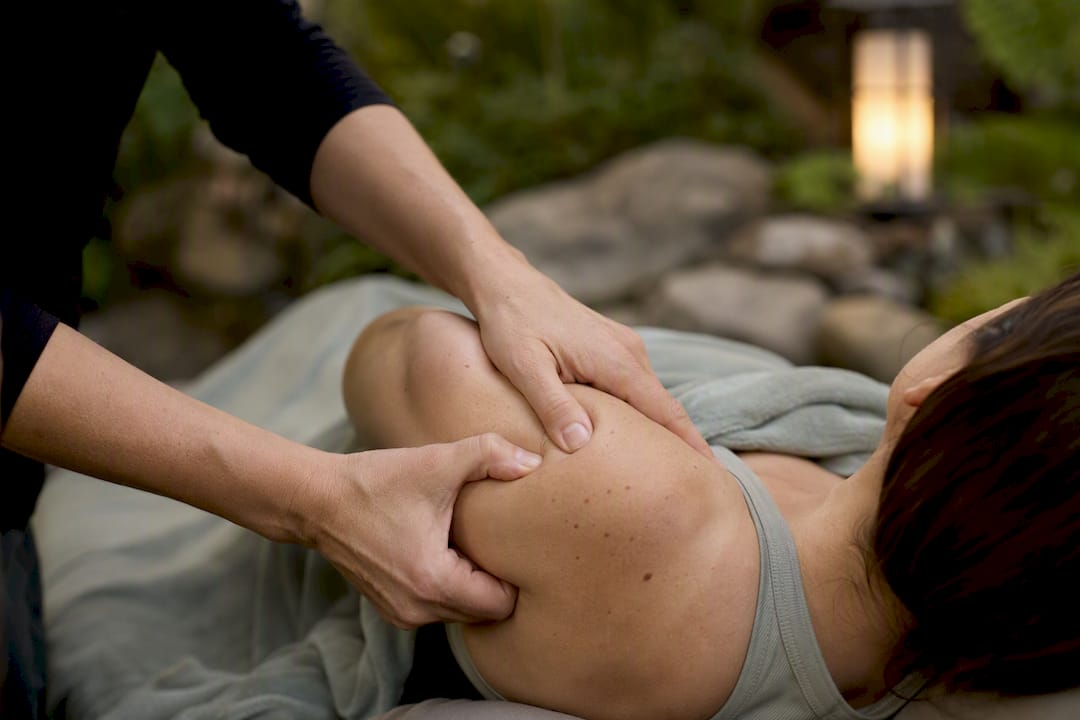
Self-massage handles day-to-day tightness well. Persistent or complicated shoulder pain, like a nagging rotator cuff issue or shoulder impingement that flares with overhead reaching, benefits from a trained eye that can tell the difference between a muscle problem and a joint problem.
Intuitive Balance Massage builds shoulder sessions around that distinction. A typical visit includes:
A short intake conversation about how and when the pain shows up
A targeted assessment of shoulder blade movement and range of motion
Hands-on treatment matched to what that assessment reveals, whether that’s deep tissue, myofascial work, or a sports-massage approach for an active client
A simple home plan so progress holds up between visits
Readers dealing with posture-driven tightness from long desk hours might recognize themselves in this guide to massage therapy for desk workers, and anyone curious about specific case patterns can check out how the clinic approaches neck and shoulder tension in Raleigh.
The Gap Between Self-Massage and Real Recovery
Most advice on shoulder pain treats massage as either a miracle or a waste of time, and both takes miss the point. The research is pretty clear that massage earns its keep in the short term, easing pain and loosening tissue right when you need it, but it doesn’t rewrite bad movement patterns by itself. That’s the part conventional advice skips.
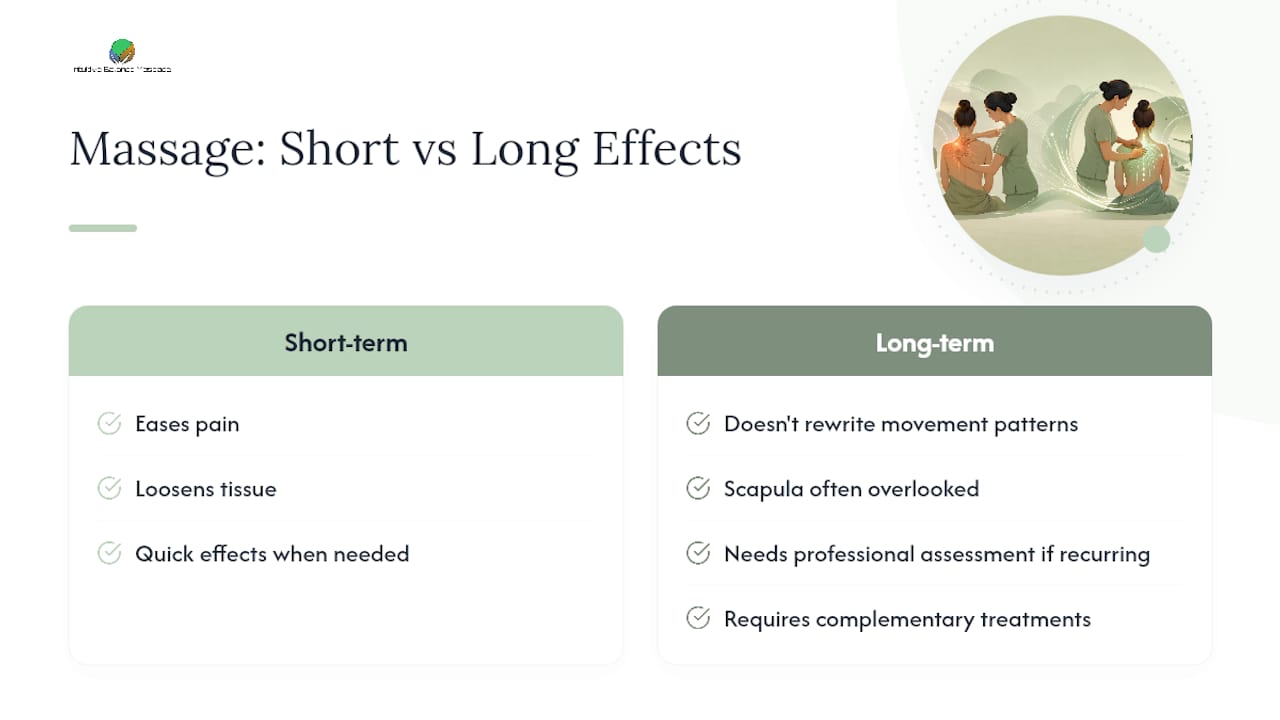
What gets overlooked constantly is the shoulder blade. People fixate on the joint itself, poking at the deltoid and rotator cuff, while the scapula, the thing that actually controls how the arm moves, sits stiff and undertrained. A therapist who checks scapular mechanics before reaching for deep pressure is doing something most self-massage routines never will.
If you take one thing from this, prioritize consistency over intensity. A tennis ball against a wall for ninety seconds most days beats one brutal session that leaves you sore for a week. And if pain keeps returning despite steady self-care, that’s the pattern that calls for an actual assessment, not another round of guessing at pressure points on your own.
— John
Book a Shoulder-Focused Massage in Raleigh
If your shoulder pain keeps coming back despite foam rolling and towel stretches, a 60-minute targeted therapeutic session at Intuitive Balance Massage gets at what self-massage can’t reach. Every session starts with a real assessment of how your shoulder blade and joint move together, not a generic rubdown, and includes movement coaching so the relief actually holds between visits. That’s the difference between a massage that feels good for an hour and one that changes how your shoulder works day to day.
Intuitive Balance Massage, located in Downtown Raleigh, works regularly with desk-bound professionals, NC State students, and athletes carrying the same overhead-reaching and rounded-shoulder patterns. New clients can book their first session at the $60 introductory rate and start with a shoulder-specific plan built around what your body is actually doing, not a one-size routine.
Sources
This article is general information, not a substitute for advice from a qualified doctor. Consult a qualified healthcare professional about your own circumstances before acting on anything here.
FAQ
Can massage fix a rotator cuff tear?
No. Massage can ease muscle tightness and compensations around a rotator cuff injury, but it doesn’t repair torn tissue, and a suspected tear warrants a medical evaluation.
What’s the best massage technique for shoulder impingement?
Gentle myofascial release and scapular mobility work tend to help more than deep, forceful pressure, since impingement often improves with better shoulder blade mechanics rather than harder tissue work.
How often should I get massage for shoulder pain?
There’s no universal number, but many people notice the best results with sessions spaced one to two weeks apart combined with daily self-massage and stretching in between.
Is deep tissue or Swedish massage better for shoulder tension?
Deep tissue targets stubborn knots and chronic tightness more directly, while Swedish massage suits general relaxation and lighter tension; a therapist at Intuitive Balance Massage will typically blend both based on what your assessment shows.
When should I stop self-massaging and see a professional?
Stop and book an assessment if pain includes numbness, noticeable weakness, sharp radiating sensations, or swelling that doesn’t ease with rest.


Comments