


The Right Massage for IT Band Pain: What Actually Works

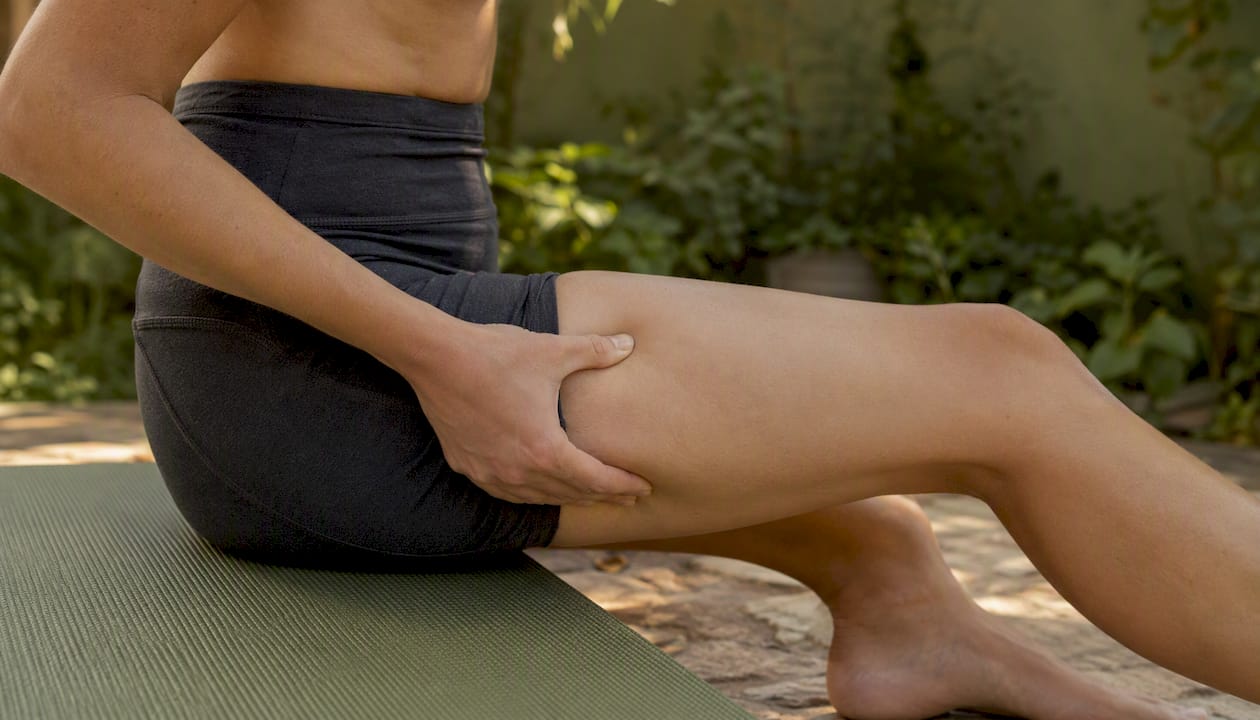
Massage can genuinely calm IT band symptoms, but not the way most runners think. The fix isn’t grinding a foam roller into the sore spot on your outer knee. It’s releasing the muscles that pull the band tight in the first place, mainly the tensor fasciae latae (TFL) and gluteus medius, along with the glute max and vastus lateralis nearby.
Skip aggressive direct pressure on the IT band itself, especially near the knee.
Focus self-massage on the TFL and glute medius/maximus.
Try the 10-minute routine below, or book a session at Intuitive Balance Massage in Raleigh if pain persists.
Key Takeaways
Relieving IT band pain through massage works best when you target the TFL and glute muscles that load the band, rather than rolling the band itself.
Point | Details |
Target muscles, not the band | Focus self-massage on the TFL, glute medius, and glute max instead of the tender spot on the outer knee. |
Compression, not friction | Current research frames IT band pain as compression of tissue under the band, not the band rubbing back and forth. |
Pair massage with strengthening | Glute bridges and clamshells after self-release help fix the hip weakness driving the tension. |
Know when to stop self-care | Persistent pain past two to three weeks or sharp, localized tenderness calls for a professional look. |
Book targeted therapy locally | Intuitive Balance Massage in Raleigh offers hip and glute-focused sessions, with a $60 rate for new clients. |
Table of Contents
Does Massage Help IT Band Pain?
Massage helps IT band pain indirectly. It doesn’t loosen the band itself, because the band is fascia, not muscle, and fascia doesn’t respond to stretching or rubbing the way a tight muscle does.
For years, therapists treated IT band syndrome as a friction problem, the band sliding back and forth over the thigh bone until it got irritated. Newer imaging and cadaver research points to compression instead: a layer of fat and connective tissue under the band gets pinched against the bone, especially when the hip muscles controlling leg position are weak or overworked. That shift matters because it explains why hammering the sore spot rarely helps and why hip-focused work usually does.
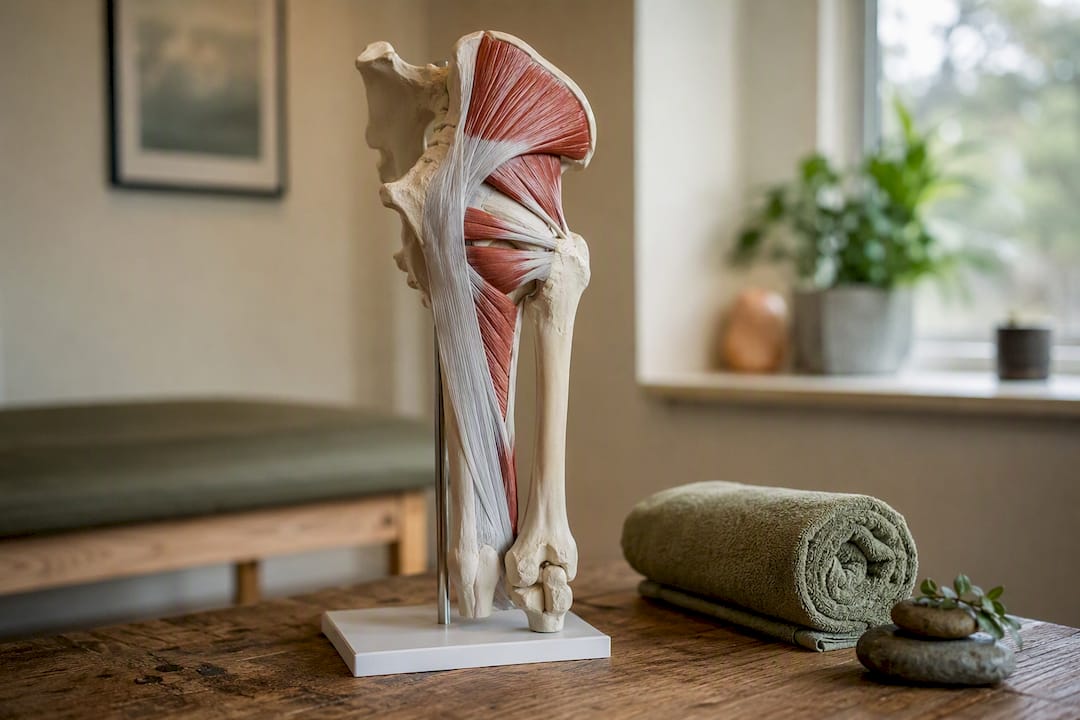
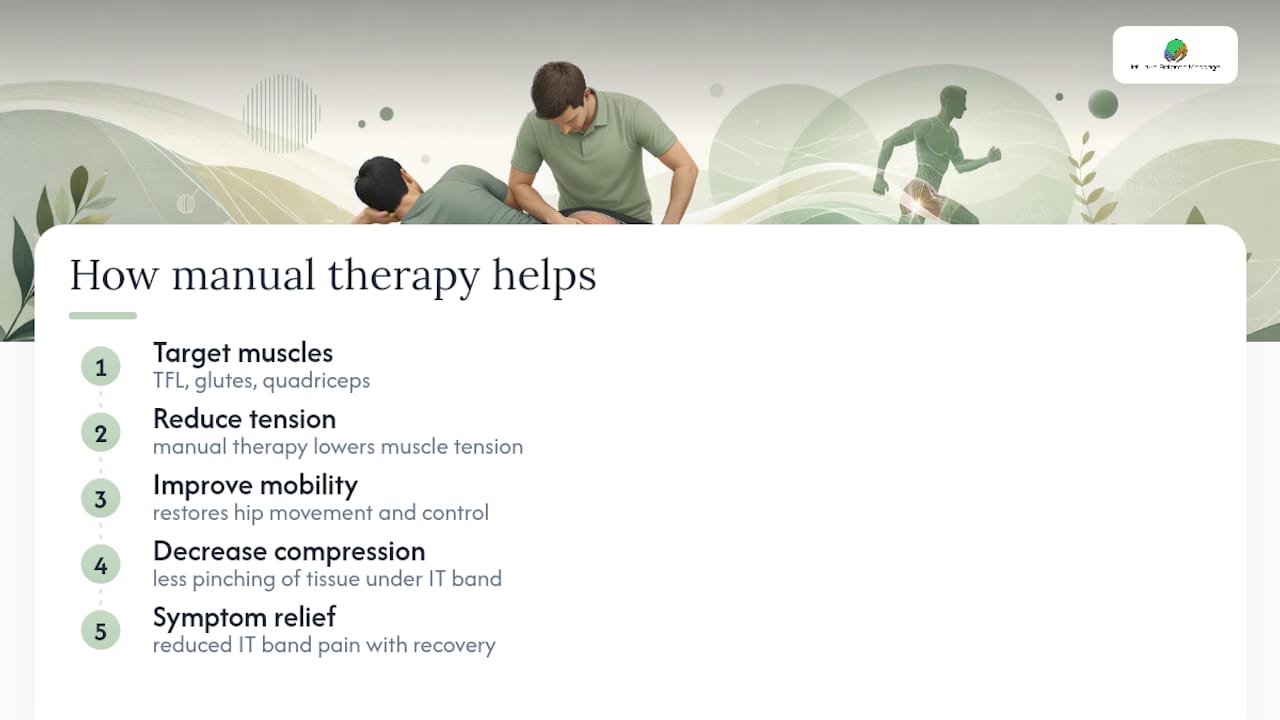
Manual therapy on the TFL, glutes, and quads reduces tension and improves hip mobility, which takes some of that compressive load off the band. Reviews of current ITBS management list manual therapy as a useful adjunct, not the main event. Most people who stick with conservative care, including massage, activity changes, and strengthening, see real improvement, and nonoperative treatment is the standard first approach for this condition.
When Should You Avoid Self-Massage on the IT Band?
Self-massage is generally safe, but a few situations call for caution or a professional look first.
Skip aggressive rolling during an acute flare with sharp, localized pain or visible swelling near the knee.
Stop if a spot is so tender you’re bracing or holding your breath. Pressure should feel like a firm, tolerable ache, not sharp pain.
Avoid deep work right before a hard run or race. Save it for after activity or on rest days.
Seek a clinical evaluation if pain doesn’t budge after two to three weeks of consistent self-care, if it worsens, or if you notice clicking, locking, or instability at the knee.
Pro Tip: If a spot on your outer thigh feels “stuck” and pressing on it sends pain down toward your knee, back off. That referral pattern is your body’s cue to work the muscle above it, not the sore point itself.
How to Massage the IT Band Safely (Self-Massage Techniques)
The goal isn’t to soften the band. It’s to release the muscles pulling on it, then leave the sensitive spot near the knee alone.
Foam roller, lateral thigh and TFL. Lie on your side with the roller just below your hip bone. Use your forearm and top leg to control how much body weight presses down, and roll from the hip toward mid-thigh, stopping well above the knee. Start with 30 to 45 seconds per side.
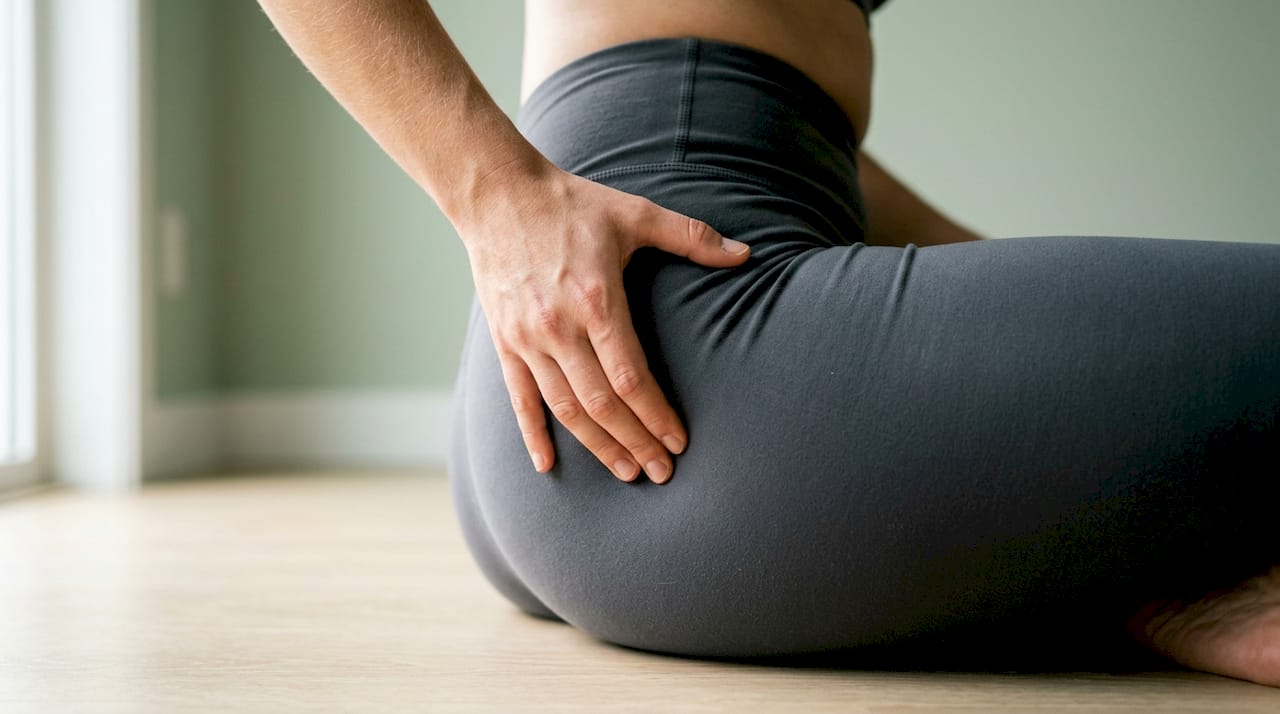
Hands-on TFL release. Find the muscle at the front-outer point of your hip, just below the hip bone. Use your thumb or a soft fist and press in slowly, holding for 20 to 30 seconds on any tight spot rather than sliding back and forth.
Glute medius and piriformis with a ball. Sit on a tennis or lacrosse ball against a wall or the floor, positioned on the side of your hip, roughly where a back pocket would sit. Lean in, breathe slowly, and hold for 30 to 60 seconds per spot, shifting your angle slightly to find tender areas.
The one hard rule: never spend extended time grinding directly over the painful point on the outside of the knee. That’s the compressed tissue current evidence points to as the actual problem, and aggressive rolling there tends to aggravate rather than help.
Pro Tip: If you only have five minutes, spend it on the TFL and glute medius. Those two muscles do more to change how much the band gets compressed than any amount of rolling on the band itself.
For a broader look at which areas deserve attention in a full-body session, this breakdown of targeted massage areas is worth a read.
A 10-Minute Post-Run Routine for IT Band Relief
Run through this after training, or on an easy evening when your hip and outer thigh feel tight.
Warm up the hip (1 to 2 minutes). Hip circles standing or on all fours, plus a few slow glute squeezes, to get blood moving before you press into anything.
Self-release sequence (6 to 7 minutes). Two minutes on the TFL, two minutes rolling the lateral thigh above the knee, and two to three minutes on the glute with a ball, switching positions to hit different angles.
Reactivation (2 minutes). Two sets of 10 glute bridges, then two sets of 10 side-lying clamshells per side, to wake the hip abductors back up after releasing them.
If symptoms are mild, this full sequence once a day after activity is plenty. If things feel more irritated, cut rolling time in half, lean harder on the bridges and clamshells, and give yourself an extra rest day between hard efforts. A mobility checklist built for athletes offers a good companion progression if you want to build this into a broader warm-up and cool-down habit.
Which Muscles Actually Drive IT Band Tension?
The IT band itself is a thick strip of fascia running from your hip to just below your knee. It doesn’t contract, so it can’t be “released” the way a muscle can. What controls how tight and loaded it gets are the muscles attached to it, mainly the TFL at the front of the hip and the glute medius and glute max behind it.
The TFL and glute max both feed into the IT band at the hip, so tightness or weakness here changes how much tension the band carries lower down.
The glute medius stabilizes your pelvis with every stride. When it’s weak, your hip drops slightly with each step, which studies on hip mechanics link to more compression at the knee.
During a massage session, this is why a therapist will often spend more time on your hip and outer thigh than on the sore spot you actually came in complaining about.
Releasing these muscles takes some tension off the band, but pairing that with hip-strengthening work is what makes the change stick. Massage alone tends to give temporary relief; strength changes the pattern causing the problem, a point echoed for tight hip and mobility issues broadly.
When Should You See a Massage Therapist for IT Band Pain?
Self-care handles a lot of cases, but a few signs mean it’s time to book a session rather than keep working on it solo.
Pain that hasn’t eased after two to three weeks of consistent self-massage and activity changes.
Discomfort that shows up earlier in your run each time, or lingers well after you’ve stopped.
Any suspicion that hip weakness or an uneven gait is driving the problem. That’s genuinely hard to assess on yourself.
When you book, ask whether the therapist has experience with runners or IT band syndrome specifically, what techniques they use (trigger-point work, glute release, hip assessment), and how they’ll tailor the session to your goals. A good therapeutic session at Intuitive Balance Massage typically combines hands-on release through the hip and thigh with an assessment of what’s driving the tightness, so you leave with more than just temporary relief.
A Clinician’s View on Recovery and Getting Back to Activity
Massage buys you comfort, but comfort isn’t the same as fixing the mechanics behind IT band pain. The most durable results I’ve seen discussed in the research come from pairing hands-on release with consistent glute and hip strengthening, not from picking one or the other. If your symptoms keep circling back despite solid self-care, that’s the signal to get hands-on guidance rather than keep guessing at home.
— John
How Intuitive Balance Massage Can Help With IT Band Tension
Chasing IT band pain with a foam roller only gets you so far when the real problem is upstream hip tension you can’t fully reach yourself. At Intuitive Balance Massage in downtown Raleigh, sessions target the TFL, glute medius, and surrounding hip muscles with the kind of sustained, hands-on pressure that’s hard to replicate solo, and each session is built around your specific activity and pain pattern rather than a generic routine. New clients can start with a $60 introductory rate, an easy way to see whether targeted therapeutic work changes how your hip and thigh feel after a run. Browse available services to find the right session length, or head straight to the booking page to grab a time that works for you.
Sources
FAQ
Is Massage Good for IT Band Syndrome?
Yes, when it targets the TFL and glute muscles rather than the band itself. It reduces the muscular tension that compresses tissue at the knee, though it works best alongside hip strengthening.
How Do You Release a Tight IT Band?
You can’t stretch or release the band directly since it’s fascia, not muscle. Instead, work the TFL and glute medius with sustained pressure, then reinforce that with glute-strengthening exercises.
Is It Okay to Use a Massage Gun on the IT Band?
A massage gun is better aimed at the TFL and glute muscles than the band itself, using light to moderate pressure. Avoid running it directly over the tender spot near the outer knee.
How Do You Rub Out Your IT Band?
Rather than rubbing the band, use a foam roller or ball on the outer hip and glute area, holding on tight spots for 20 to 60 seconds instead of sliding back and forth over the sore knee area.


Comments